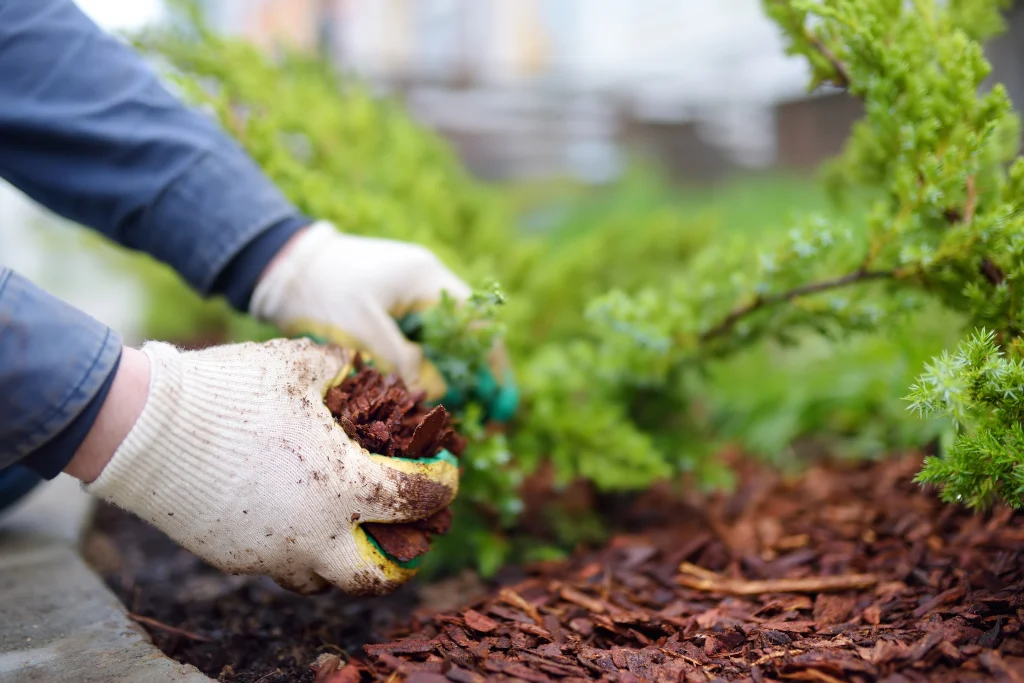
Red mulch adds vibrant color to your garden while helping retain moisture, suppress weeds, and regulate soil temperature, but it comes with a higher cost and safety considerations due to its chemical dyes. This eye-catching mulch can be effective for aesthetic and functional purposes, though it requires more maintenance and cautious use around edible plants, kids, and pets.
What Is Red Mulch?
Red mulch is typically made from wood chips dyed a bold crimson, often using chemical or sometimes vegetable-based dyes. It’s used to cover garden soil, offering moisture retention, temperature control, and weed suppression—plus a pop of color for visual appeal.
Top Benefits of Red Mulch
- Insect Repellent: The dye in red mulch can deter insects like cockroaches, crickets, and termites.
- Moisture Retention: Red mulch slows water evaporation, helping soil stay hydrated longer.
- Soil Temperature Regulation: Especially helpful in variable climates, red mulch helps stabilize soil temperatures year-round.
- Weed Suppression: It blocks sunlight and smothers existing weeds, helping reduce garden maintenance.
- Bold Visual Contrast: Its rich color complements green foliage and adds flair to pathways and flower beds.
Drawbacks to Consider
- Chemical Content: Many red mulches use chemical dyes, which can leach into soil and may not be safe for food gardens or pet zones.
- Fades Over Time: Sun, rain, and snow gradually bleach the color, requiring reapplication to maintain aesthetics.
- Higher Cost: The dyeing process makes red mulch more expensive than natural mulches.
- Limited Placement: Not recommended for vegetable or flower beds; avoid high-traffic or pet-accessible areas.
- Rodent Attraction: Stored mulch can attract rats or mice if not sealed properly.
Is Red Mulch Right for You?
If you’re aiming for eye-catching garden beds or decorative borders and don’t mind extra maintenance, red mulch can be a great choice. However, for edible gardens or pet-friendly areas, consider organic, untreated mulches instead.
Quick Tips for Using Red Mulch
- Apply it 1½ inches deep for best results.
- Avoid use near vegetable plants or edible herbs.
- Keep children and pets away from dyed areas.
- Refresh the mulch annually to preserve color vibrancy.
In More Details
Despite growing more prevalent, red mulch is still very uncommon. There are plenty of benefits of red mulch, though! It is mulch made from wood dyed to look more appealing. The crimson mulch stands out quite a bit in the otherwise light-colored bed. Red mulch has good aspects and bad points. Therefore, it’s wise to be aware of both before utilizing them in your garden.
Why Use Red Mulch?
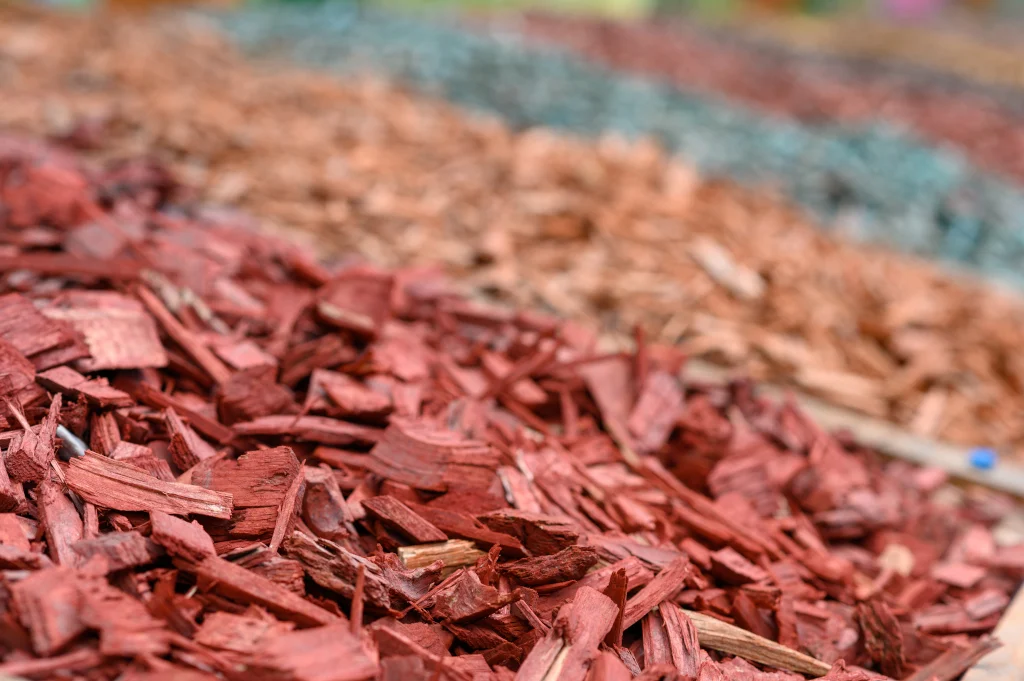
Red mulch has several advantages for your garden and plants, including its eye-catching cedar tone. A layer of shredded wood debris known as mulch is spread over the soil to help retain moisture and fight weeds while allowing air and nutrients to reach the soil. Mulch with a heightened red hue in America helps water to permeate uniformly, allowing moisture to reach all soil layers in your garden. Other mulches prevent the earth from adequately breathing by absorbing water on contact.
The red mulch from Mulch America is beneficial for preventing soil erosion. Additionally, mulching your garden can help keep your soil consistently warm, inhibit illnesses from spreading through the soil, and keep plants clean. Wood mulch decomposes gradually, supplying your soil with nutrients over time. Additionally, you’ll discover that red mulch gives your garden and landscape more aesthetic flair. Imagine how vibrant your new, green shrubs and plants will look next to the deep crimson mulch.
Appearance
There is no denying that red mulch draws attention. It can draw attention to a bed or border and works particularly well on paths. Bright crimson may be appealing and effective when paired with green grass or vegetation.
For the best results, it must be placed on a route that is deep enough, roughly 1 1/2 inches deep. The red dye in the mulch will eventually vanish as it is bleached by the sun and thinned out by the rain and snow. This implies that you must frequently change the red mulch to keep the color vibrant and preserve the impression. The mulch’s dye will leak into the soil, which is a drawback.
Chemicals
The dye that gives red mulch its color is the major issue with the material. This may occasionally be a secure vegetable dye, but more often than not, it will be a chemical dye. Using pesticides in the yard requires a constant balancing act, and making things much riskier by adding a chemical red to the mix.
You may learn a lot from the red mulch’s directions, which state that flower and vegetable beds shouldn’t be covered with it. It implies that these things are not safe to be around. Should you trust it in the rest of your garden if it isn’t safe there? That is particularly true if your children or dogs use the garden. Would you prefer that near these chemicals?
Cost
Red mulch is more expensive than standard mulch. That is a result of the additional process required to color the mulch. Simply having the novelty impact of the red mulch costs much more money. Suppose you don’t truly want the drama that color may offer. In that case, you should consider whether the additional cost is worthwhile, especially since you can only apply it in specific areas of the garden.
Safety
You must be very careful where you place red mulch if you decide to use it in your garden. That restricts who can use it. Additionally, you must keep pets and other animals out of it, which can be nearly impossible in a backyard. You should keep the red mulch away from areas where people can come into contact with it for the sake of your family’s safety.
Red mulch can be used merely decoratively, but it will require a lot of maintenance to maintain its aesthetic quality. Statistics indicate that rats will find it especially tasty if you store it. Therefore, you’ll have a vermin problem and need to keep it out of other areas.
The Benefits of Red Mulch
Here are the top five benefits of red mulch:
Displaces Insects
Red mulch can help repel insects. Did you know that? Cockroaches, termites, and crickets do not appreciate the dyes in color-enhanced mulch or the coverage that mulch provides over the soil.
Retains Temperature
In the Midwest, a saying goes, “If you don’t like the weather, wait a day, and it will change.” Mulch helps soil maintain its temperature to keep your plants healthy through weather changes.
Adds Moisture
Red mulch is beneficial to the soil. As it decomposes, it releases nutrients and aids the soil in retaining moisture. Mulch will stop the sun from evaporating water from your soil, keeping your plants in the moist environment they require to develop.
Eliminates Weeds
Mulch benefits your garden in many ways, than just keeping the soil moist. Mulch can also aid in preventing the growth of weeds. By covering weeds and obstructing sunlight, red mulch can prevent weeds from developing and aid in the death of existing weeds. Weeds can outcompete the plants in your garden and sabotage its tidy appearance.
Adds Color
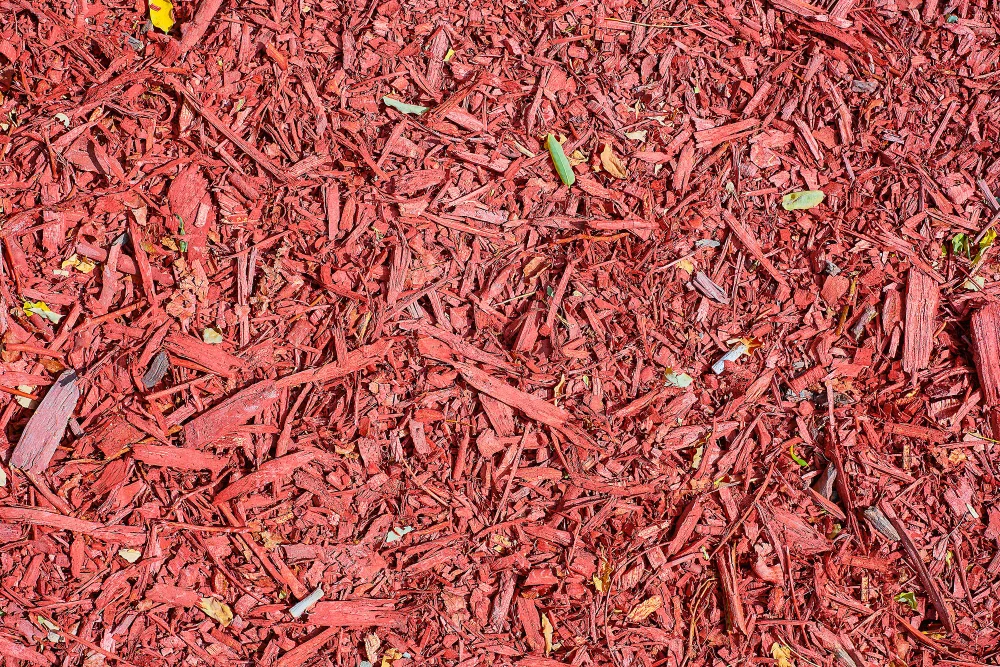
Red mulch has a deep, cedar-red tint that complements a range of plants and landscapes. Mulch America’s crimson mulch is the reason.
Interested in reading about other mulches? Interested in reading about more organic gardening?
FAQ
- Is red mulch safe for vegetable gardens?
No. Most red mulch contains chemical dyes not recommended for use around edible plants. - Does red mulch help with bugs?
Yes. It can deter certain pests like termites and cockroaches due to its dyes and coverage. - How long does red mulch keep its color?
Typically 6–12 months. Sunlight and rain gradually fade the dye, requiring periodic top-up. - Why is red mulch more expensive?
The cost comes from the added processing and dyeing compared to natural mulch. - Can I use red mulch around pets?
It’s not advised. Chemical dyes may pose risks if pets ingest or come in frequent contact with the mulch. - What are safer alternatives to red mulch?
Natural wood chips, bark mulch, straw, and compost are all organic and chemical-free options.