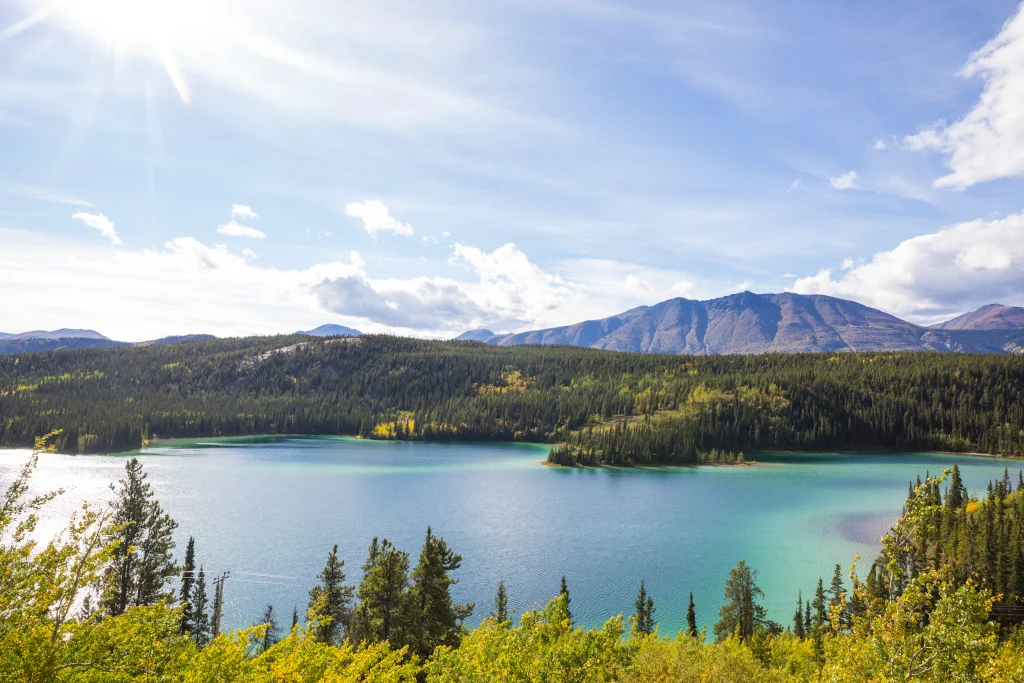
Yes, off-grid living is possible in Yukon—but it’s extremely challenging due to the harsh subarctic climate, short growing seasons, limited road access, and high cost of living. While many long-time residents live off the grid successfully, newcomers from milder regions may struggle to adapt. Yukon rewards only the most prepared and resilient off-grid enthusiasts.
Key Challenges of Off-Grid Life in Yukon
- Harsh winters: Temperatures can drop to -50°C (-58°F) with very short daylight hours.
- High costs: Most goods are imported, making food and building materials very expensive.
- Limited infrastructure: Roads are few, especially in remote areas. Snowmobiles and sleds are common in winter.
- Short growing season: Only certain crops (berries, hay, some veggies) grow, and mainly in southern Yukon.
- Construction limits: The Building season is just a few months long due to climate constraints.
Benefits of Off-Grid Life in Yukon
- Legal and accepted: Off-grid living is common and fully legal. Homeschooling laws are also lenient.
- Clean water: Yukon boasts abundant and pristine surface and groundwater resources.
- Low land cost: While houses are pricey (especially in Whitehorse), land itself is often affordable.
- Renewable energy rebates: Up to $5000 available for solar and wind systems.
- Wildlife and solitude: Great for hunting, fishing (with a license), and privacy seekers.
Power Options
Most off-grid homes use solar power in summer, though output drops sharply in winter. Wind power is an option, but it comes with higher costs. Both are eligible for a $5000 rebate under the Renewable Energy Systems program.
Climate Overview
Yukon has a subarctic climate with mild summers (up to 25°C / 77°F) and extremely cold winters. Sunlight is abundant in summer but scarce in winter. These conditions make off-grid survival more difficult than in other provinces.
Livelihood and Economy
- Unemployment: Low (4%) compared to the national average (6.9%).
- Main jobs: Mining (gold, silver, zinc) and tourism.
- Minimum wage: $12.71/hour.
Wildlife and Food
The area is rich in wildlife such as caribou, moose, wolves, and salmon. While crop cultivation is limited, livestock farming (cattle, pigs, poultry) is common among off-grid residents.
Natural Hazards
Expect avalanches, wildfires, floods, landslides, and even earthquakes. Monitor weather forecasts daily if living remotely.
In More Details
Yukon is not suitable for off-grid living; most people who live here off-grid were born and raised in the province and are accustomed to the subarctic temperature. Property prices are far higher than the national average, and living expenses are equally high because practically everything must be imported. Suppose you are from British Columbia, Alaska, Nunavut, or the Northwest Territories. In that case, you should have no trouble living off the grid in Yukon.
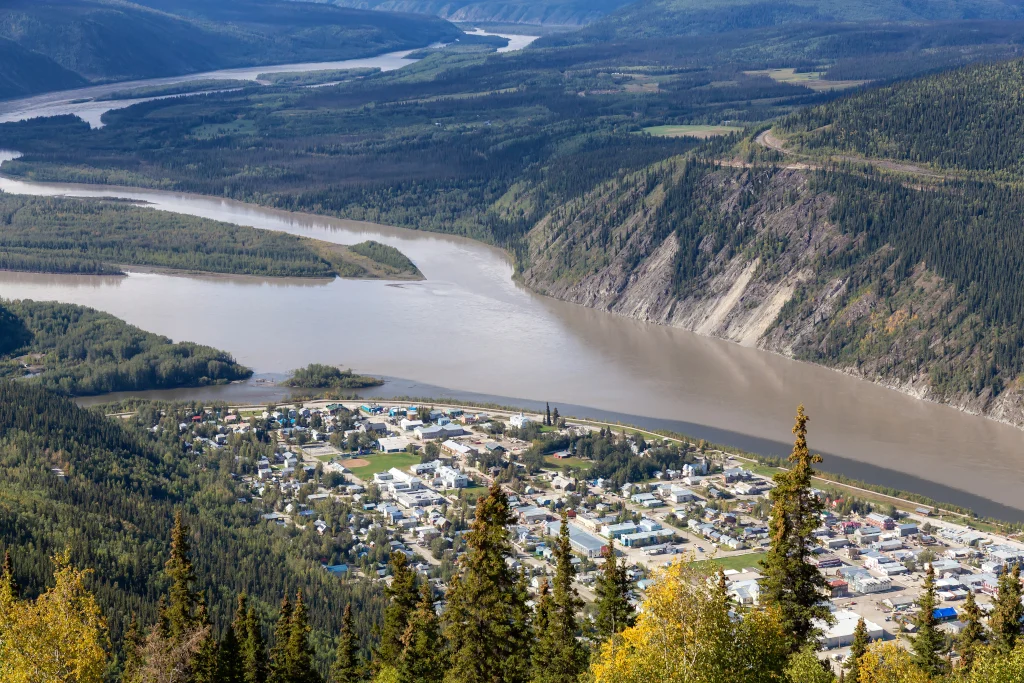
Yukon is a province in western Canada with one of the country’s lowest population densities. This region has had a tremendous influx of immigrants over the last few centuries, especially after gold was discovered in this province. This sparked the Klondike gold rush, transforming Dawson from a modest tent community to a true city with a population of over 40k. The Klondike gold rush was gone in three years, and Dawson’s population began to decline
Although states and provinces with low population density are excellent for off-grid living, there is such a thing as way too low. Alaska has roughly 730k people, and Yukon only has 35k. The biggest issue with a province with such a low population density is that there isn’t much demand for many products. This causes common items to be extraordinarily expensive in some circumstances.
Should You Live Off-Grid in Yukon?
Yukon has a sizable off-grid population; living off the grid in most settlements and even cities is considered normal. Although the gold rush has ended, many people still profit by prospecting for gold. However, much of the work is now done by big machinery rather than by humans prospecting manually for gold. There is still a ton of gold in Yukon, and every year, more individuals come to try their luck, albeit most of them end up broke.
What’s the Climate in Yukon?
The majority of this province has a subarctic climate, which is arguably the worst for off-grid life. The typical summer temperature is around 77°F (25°C), and the sun shines all day. The days are relatively short throughout the winter, and temperatures range from 25°F to -58°F ( -3C to -50C ). The main reason why not many people live in this province is because of the climate. You will need to be extremely motivated to live here all year round. However, if you simply want to live off the grid, this is probably one of the worst places to do so.
What Types of Crops Can You Grow in Yukon?
Because of the subarctic temperature, few crops can be cultivated here. However, you can still grow nuts, berries, grapes, hay, and some vegetables. The finest sites for crop cultivation are in the province’s southern regions. Because crop cultivation is limited in this region, many people choose to raise livestock, the most popular cattle, sheep, pigs, poultry, and even wild horses.
What’s Freshwater Availability Like in Yukon?
Yukon has abundant fresh water, owing primarily to the local climate and the relatively low demand for freshwater. The average annual rainfall is approximately 33′′ (838 mm), and the average annual snowfall is approximately 58′′. ( 148 cm ). This province also boasts many freshwaters below and above ground, and the groundwater is among the cleanest in the country, thanks to the low population density.
What Type of Wildlife is in Yukon?
Regarding fauna, Yukon provides a haven for many subarctic animals, including caribou, wolves, moose, mountain sheep, marmots, and the rare polar bear. Salmon, burbot, bull trout, inconnu, lake trout, northern pike, lake whitefish, kokanee salmon, coho salmon, chum salmon, rainbow trout, and chinook salmon are the most prevalent fish. Both fishing and hunting require a license.
How Can You Generate Off-Grid Power in Yukon?
Solar power: People typically generate power with solar panels near larger towns and villages. However, while these operate well in the summer, their power output is severely poor in the winter due to the shorter days. The Renewable Energy Systems Rebate is available in Yukon for anyone who wants to install solar panels. However, it is restricted to $5000.
Wind power: You can also use the Renewable Energy Systems Reimbursement for wind power systems. However, wind turbines are far more expensive, and the rebate is still capped at $5000.
Are There Off-Grid Living Laws in Yukon?
Off-grid living in Yukon is not only legal, but it is also a way of life in this province. Because Yukon has such a low population density, there isn’t much demand for utilities. Most individuals either create their own or don’t bother with it. Only the “larger” cities have schools due to the low population density, and many individuals prefer to homeschool their children. Homeschooling laws are relatively lax, and you must either register or notify the local authorities.
What’s Road Access Like in Yukon?
Yukon has few highways, and most people in the province do not travel far from their homes. In the summer, most people use four-wheel-drive vehicles, and in the winter, they utilize snowmobiles or dog sleds.
What’s the Cost of Off-Grid Land in Yukon?
The cost of land is typically low. However, the cost of a house might be extremely high. Purchasing a home in Whitehorse is nearly as expensive as in Vancouver, and prices rise yearly. Purchasing a parcel of land and constructing a house appears to be a wonderful idea. Still, the construction season is only a couple of months long, and the cost of building materials is more than double that of the rest of the country.
What’s the Cost of Living Off-Grid in Yukon?
Living in Yukon is expensive; most products must be imported. By the time they reach the typical consumer, the costs have already doubled, if not quadrupled. The good news is that this province has all you need if you know how to get off the land.
What’s the Job Market Like in Yukon?
Yukon’s unemployment rate is lower than the national average; it is now about 4%, whereas the national average is 6.9%. Generally, the lower the population density of a province or state, the lower the unemployment rate. The minimum wage is $12.71, which is comparable to neighboring provinces. The majority of people work in two primary industries: mining and tourism. The most found minerals in Yukon are lead, zinc, gold, silver, and copper.
Are There Natural Disasters in Yukon?
In Yukon, avalanches, wildfires, floods, landslides, storms, and earthquakes are common. Because of the local climate, even minor storms can cause significant damage. Always check the weather forecast before venturing out.
Can You Live Off-Grid in Yukon?
I do not recommend off-grid living in Yukon due to the harsh local climate and the high cost of everything. Although many people are off-grid living in this province, most of them are natives, and you will struggle if you come from a southern province or state.
Final Thoughts
Not recommended for beginners. Yukon’s extreme climate, high expenses, and limited growing season make it one of the hardest places in North America to live off-grid, especially for non-locals. However, with enough resilience, preparation, and resourcefulness, it can be done.
FAQ
- Is it legal to live off-grid in Yukon?
Yes, off-grid living is legal and widely accepted in Yukon, especially outside major towns. - How cold does it get in Yukon during winter?
Winter temperatures can plummet to -50°C (-58°F), with very short daylight hours. - Can you grow your own food?
Only a few crops like berries, hay, and hardy vegetables grow well, mostly in southern Yukon. Livestock farming is more common. - Is Yukon accessible year-round?
Not easily. Most areas rely on 4WD in summer and snowmobiles/dog sleds in winter. - How much does land cost?
Raw land is affordable, but houses (especially in Whitehorse) are expensive due to high demand and limited building time. - Can you use solar power in Yukon?
Yes—but only reliably in summer. Solar and wind systems qualify for a $5000 government rebate. - Is hunting and fishing allowed?
Yes, but both require proper licensing. - Are natural disasters common?
Yes. Wildfires, avalanches, and severe storms can occur regularly in many regions.