This post contains affiliate links. If you buy through them, we may earn a commission at no extra cost to you. Learn more.
Yes, you can grow grapes in your backyard easily—just follow five simple steps: choose the right location, select the best variety for your climate, plant them properly, prune and train your vines annually, and fertilize sparingly. With the right care, your vines will yield juicy, delicious grapes in just a few years!
Step 1: Choose the Right Spot
Grapes thrive in full sun and well-drained soil. They need:
- 50–100 sq. ft. per vine
- 7–8 hours of daily sun
- 8 feet between rows
Good air circulation is essential to prevent fungal diseases like powdery mildew. Mix compost into your planting site to improve drainage and fertility.
Step 2: Select the Best Grape Variety
Choose grapes suited to your USDA zone and purpose (eating or winemaking):
- American (Vitis labrusca): Cold-hardy; great for juices and jams. Zones 4–7.
- European (Vitis vinifera): Ideal for wine and table grapes. Zones 7–10.
- Muscadine (Vitis rotundifolia): Best for humid southern regions. Zones 7–9.
Hybrid grapes combine traits from different types and are often more disease-resistant.
Step 3: Plant the Grapevines
Plant in early spring (or winter in warm zones). Dig a 2-foot-deep hole and enrich it with compost. Grapevine roots can reach 15 feet, so space is important. Trellises are optional for table grapes, but ideal for wine grapes, and ease of harvest.
Yields: Expect 15–30 pounds per mature table grape vine, or about 12 pounds for wine grapes. You’ll need around 40 pounds of grapes to make 12 bottles of wine.
Step 4: Prune and Train Your Vines
Prune hard and consistently—grapes only grow on one-year-old wood. Training options include:
- Vineyard style: Two horizontal wires on posts. Keeps grapes easy to access.
- Trellis or arbor: Adds beauty and shade. Ideal for patios and backyard décor.
Winter pruning: Leave only a main trunk and select 1-year-old canes (2–8 buds each).
Summer pruning: Thin out excess growth to improve sunlight and reduce mildew risk.
Step 5: Fertilize Lightly
Grapes don’t need heavy fertilizing. Apply 8–10 oz. of 10-10-10 or 10-20-20 fertilizer in early spring. Use a slow-release variety for steady nourishment throughout the growing season.
Common Grape Growing Issues
- Powdery mildew: Improve airflow and spray in spring.
- Birds: Use protective netting.
- Poor pollination: Add pollinator-friendly flowers nearby.
When Will You Harvest?
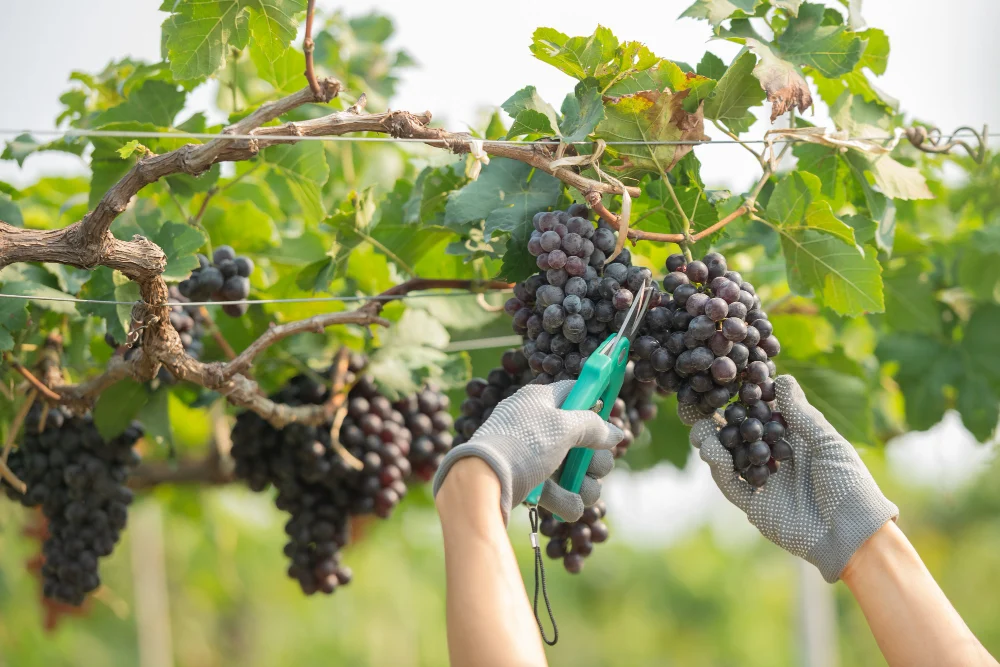
Grapes are typically ready to harvest in late summer or early fall, starting in the third or fourth year after planting. Patience pays off with a bountiful, sweet harvest!
In More Details
Have you ever fantasized about plucking enormous bunches of delicious, sun-warmed grapes from your backyard vines? Good for you, grape growing is much simpler than you might think. Here’s how you confidently grow grapes.
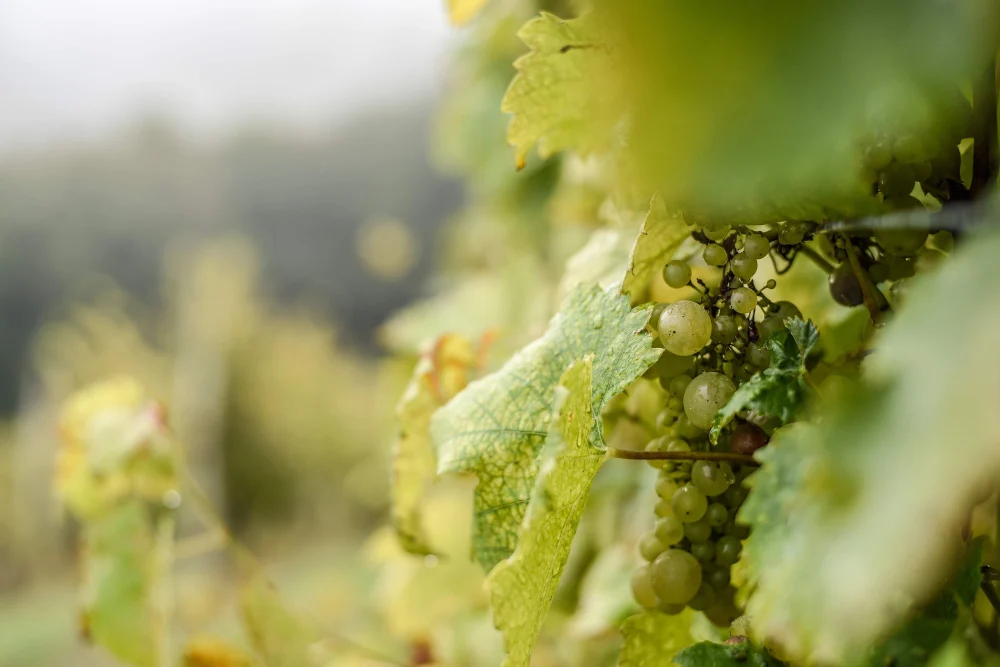
You can grow grapes anywhere in the continental United States, specifically in USDA zones 4 through 10. Grapes grow in your garden just as easily as any other crop, provided you have decent soil, enough space, and are willing to give them a little annual pruning.
The keys to success are picking the correct types that will grow and produce well in your area (we’ve mentioned some of our favorite varieties) and deciding what kind of crop you want to cultivate (grow for eating or make wine). Once you have this under control, proceed with the planting, caring for, and harvesting instructions below. Delicious fruits should be ready for harvesting in the third or fourth year, in the late summer or early fall.
Five Simple Steps for Grape Growing
Decide Where to Plant Your Grapes
You need a sizable, sunny, open area with decent soil. When planted horizontally in rows or vertically on a trellis or arbor, grapes require between 50 and 100 square feet per vine, seven to eight hours of direct sunlight daily, and about 8 feet between rows. While they grow in various soils, they thrive in well-drained, rich, organic soil that is deeply blended with adequate compost or soil conditioner (grapes cannot tolerate moist feet). The presence of air circulation on all sides protects against fungi-related illnesses like powdery mildew.
Choose the Best Variety of Grapes
American, European, and Muscadine grapes are the three main varieties, plus there are many hybrids (like our favorite Zestful grapes) created by crossing American and European varietals.
American (Vitis labrusca): The most cold-hardy grapes are American grapes, which grow well in short-season growing regions like the Northeast (zones 4-7). Table grapes, juices, and jellies are the most typical uses for these.
European (Vitis vinifera): These grapes prefer a climate more like the Mediterranean (zones 7–10) with a longer growing season. Depending on the variety, these are used as table grapes or for winemaking.
Muscadine (Vitis rotundifolia): Native to North America, muscadine grapes thrive in the humid South (zones 7-9). You can make wine or use these grapes for the table.
Choose wisely based on your USDA zone. While some kinds do better in temperate climates, some do better in heat. For advice on the best types for your specific needs and location, speak with your neighborhood Independent Garden Center.
Here are a handful of our top European, American, and hybrid table grape varietals.
Plant Your Grape Vine
You do not need a special support system for table grapes. However, moving them off the ground and onto a trellis is a good idea so that you may more easily prune and harvest them. Wine grapes need a horizontal support system that allows you to train them and provide them with the support they require. You can plant your grapevines in the early winter in USDA Zones 7 and above; in colder climates, you should wait until the early spring. Dig a planting hole approximately two feet deep and broad, and enrich it with compost because grapevines have deep roots extending up to 15 feet.
What Size Vineyard Should I Plant?
Mature table grapes can yield 15 to 30 pounds per vine. Only plant the amount of grapes you have room for!
About 12 pounds of mature wine grapes are produced on each vine, and it takes 40 pounds to produce 12 bottles. You will want many vines if you intend to make wine.
Maintain and Care For Your Grape Vines
It is crucial to maintain a pruning schedule to remove older growth and guarantee that new growth forms because grapes only produce one-year-old growth. Not trimming firmly enough is the most frequent error while pruning grapes. You will remove more plant material than you leave behind once a grapevine has grown to full maturity.
Depending on your garden objectives and the support structure you intend to use, there are a few different ways to train grapes.
Ways to Train Your Grapes
- Vineyard style: The traditional system, which consists of two wires stretched between posts, has the advantage of keeping your grapes in an easy-to-harvest location and only needs a small area, such as along a fence or wall. One central stem and a one-year-old cane with around eight buds spreading horizontally on each wire make up this technique.
- Use a trellis: This is a wonderful decorative method to incorporate culinary plants. Grapes can be used to cover pergolas with temporary shade or to be trained onto arches. While unwinding on your patio, it would be beautiful to reach up and grab a snack! Here’s a cheap trellis that works great for a small backyard vine!
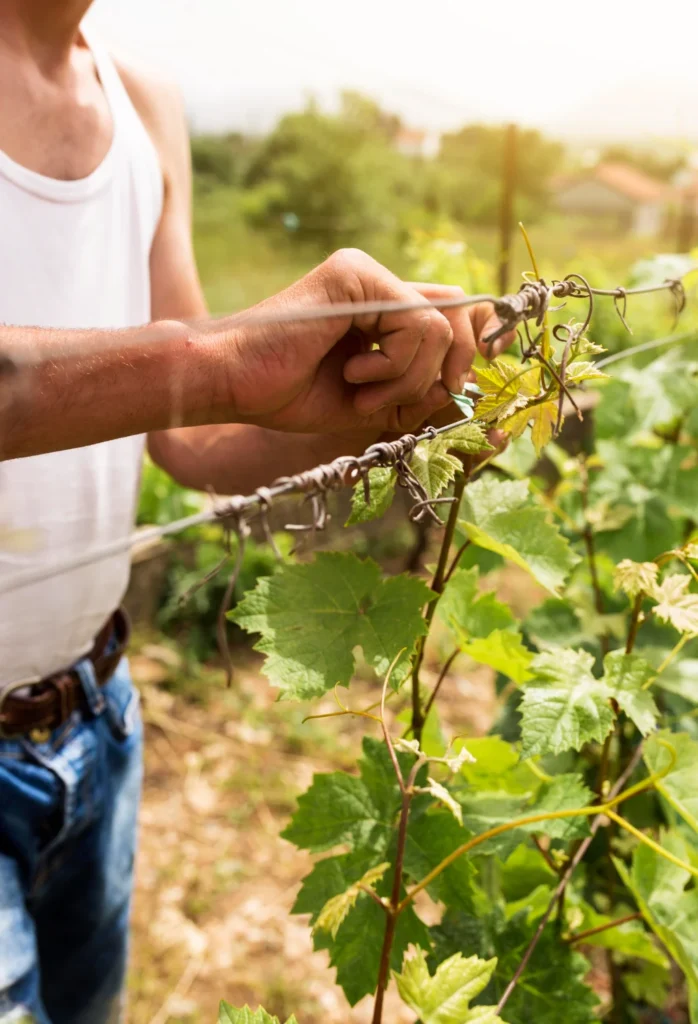
Were you looking for a less formal, easier approach? Here are some tips for managing your grape growing without a professional! Prune your grapes in the late winter or early spring. Only leave two things on your grapevine after pruning: a permanent main trunk or trunks and a year-old growth. There can be a lot of growth from the previous year, which you won’t want to keep! Remove any unnecessary older wood, thin out, and prune the year-old wood; you may leave two to eight buds per cane.
If the vines are becoming a little wilder than you would like, prune the plants in the summer. To prevent powdery mildew, thinning can also assist the fruit in receiving more sunlight and more ventilation. If the fruit appears to be growing in a lot of shade, you may try to thin it out.
Some common challenges with grape growing
The most prevalent disease that affects grape growing is powdery mildew! This is managed by increasing air circulation and spraying in the spring. Birds? Consider using netting to cover.
Make sure you have enough pollinators to produce a healthy harvest. I recommend planting a few of these flowers to improve the number of pollinators in your garden.
Fertilize Your Grapes
Generally speaking, grapevines don’t need a lot of fertilizer, so use it sparingly. Apply eight to ten ounces of 10-10-10 or 10-20-20 fertilizer in the early spring. Add the proper amount of nutrients to the soil at the base of your grapes in the early spring to enable them to thrive and bear fruit every year. I recommend this fertilizer, which slowly releases its nutrients into the ground!
Final Thoughts
Growing grapes is more about planning and consistent care than complexity. Pick the right type, plant in a sunny spot, prune yearly, and in just a few seasons, you’ll enjoy the fruits of your backyard vineyard—literally.
FAQ
- Can I grow grapes in a small backyard?
Yes! A single vine on a trellis can produce 15–30 lbs of grapes and fit in a small space. - Do I need to plant more than one vine for pollination?
Most grape varieties are self-pollinating, so one is enough. - How long before I get grapes?
You’ll usually get your first real harvest in year 3 or 4. - Can I grow grapes in containers?
It’s possible with dwarf varieties, but they prefer being in the ground with room to spread their roots. - What is the best month to prune grapevines?
Late winter to early spring, when the plant is dormant but before buds swell.