This post contains affiliate links. If you buy through them, we may earn a commission at no extra cost to you. Learn more.
To grow grass in bare spots, you must first fix the underlying soil problem—usually compacted or eroded topsoil—by aerating the area, adding compost, and waiting before seeding. Simply tossing seeds on bare patches rarely works. Follow this 7-step method to restore your lawn quickly and effectively.
7 Easy Steps to Fix Bare Patches in Your Lawn
- Identify the Root Cause
Check for erosion, poor drainage, over-fertilization, high foot traffic, pests, or fungal disease. If even weeds won’t grow, the topsoil is likely damaged. - Diversion & Recovery
If the area gets frequent foot traffic, install stepping stones, a gravel path, or temporary fencing to protect the patch while it heals. - Aerate the Bare Spot
Use a soil aerator or a simple pitchfork to loosen compacted soil. Ranking alone isn’t enough. Aeration restores airflow and microbe activity vital for growth. - Apply Compost and Mulch
Spread a generous layer of compost to rebuild healthy soil. Then mulch with grass clippings, hay, or straw to keep it moist and attract beneficial organisms. Let it break down naturally over 1–2 months before seeding. - Choose the Right Grass Seed
Pick a seed variety that fits your local climate and needs little fertilization. Avoid high-maintenance varieties that exhaust the soil. - Plant & Protect
Once the mulch has decayed, plant your seeds and water the area 1–2 times daily to keep the soil moist. Use plastic bottle covers or slug pellets to protect new seedlings from pests. - Time It Right
Fall is the best time to seed large patches—about 50–60 days before the first frost. For small spots, you can seed in summer with proper watering and sun protection.
Pro Tips
- Don’t mulch and seed on the same day. Always allow compost and mulch to break down before seeding.
- Watch for germination rates. Add more seed after a few days if you see low growth.
- Slug control is key. Apply pellets weeks ahead or use bottle barriers on small spots.
In More Details
There are plenty of reasons why grass won’t grow in some places. Even a well-kept lawn can have a couple of bare patches. When this happens, most people just add some grass seeds and hope for the best. However, this doesn’t always work. Here’s how to get grass to grow in bare spots.
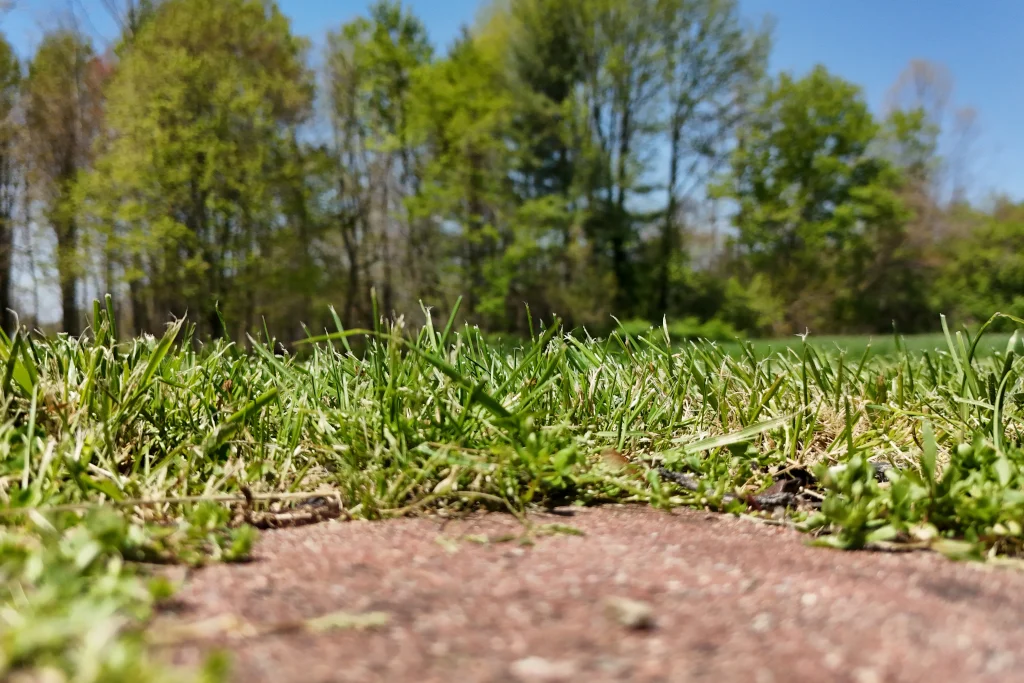
Generally speaking, eroding topsoil, wet soil, excessive fertilization, and inadequate sunlight are the main causes of dry spots on a lawn. If you have an area where nothing grows (not even weeds), you’re probably dealing with deteriorated topsoil.
Aerating and composting the topsoil will encourage grass to grow in bare patches. Most of the time, bare spots signal soil erosion. This means that you can grow grass there by restoring the topsoil with organic materials like grass clippings and adding some compost.
Why Does Your Grass Have Bare Spots?
Grass can get bare spots for many reasons. Some of them include heavy foot traffic, dryness, disease, chemical burn, and weed or insect infestation. You should identify the cause of the issue before you start any repairs. This will enable you to stop it from happening further.
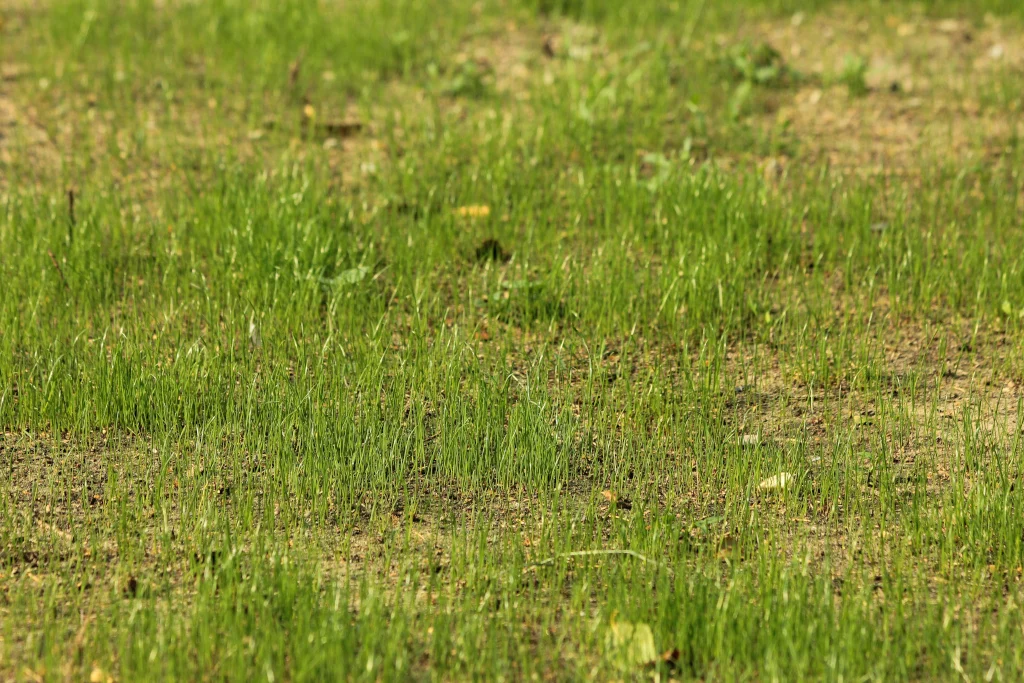
If there is a lot of foot traffic, try to find a strategy to divert traffic away from the location. This can entail setting up stepping stones, a gravel walkway, or a barrier to divert traffic and safeguard that part of your lawn.
If your lawn has a disease, research the particular cause of the sickness or the insects to blame. Before starting to grow new grass, most treatments must be administered and given time to work. Make sure to wait the recommended time before planting new seeds.
Here’s How to Grow Grass in Bare Spots
Aerate the Bare Spots
Aerating the soil is the first step in repairing bare spots in your lawn. This is because it’s likely that those areas have compacted soil, which indicates that there aren’t enough healthy bacteria and microorganisms present. Raking the soil will not be sufficient to aerate it; you must either till it or use a soil aerator.
Sometimes, I use a pitchfork to aerate small parts of my lawn. Sure, it’s time-consuming, but not that difficult and pretty cheap! This is the pitchfork I own and recommend to others. It’s a high-quality budget option!
Add a Layer of Compost
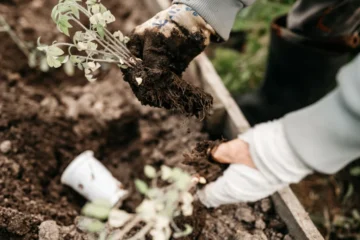
After aerating the soil, it is crucial to spread a layer of compost over the bare patches. The helpful bacteria in compost will migrate once the soil has been aerated, helping the grass grow. A top-notch compost feeds not only the plants growing there but also the bacteria and other microbes. Compost can be applied directly to the bare region or blended into the surrounding soil.
Mulch the Area
Even when the soil has eroded, a thick layer of mulch will feed the soil. Mulching the bare patches in your lawn will help rebuild the topsoil. The mulch will prevent the topsoil from drying out and encourage the migration of good bacteria, insects, and worms. Grass clippings, hay, and straw are excellent examples of mulches that decompose fairly quickly and are great for filling in bare places on the lawn. Make sure to cover the compost with a thick layer, though.
Before planting the grass seeds, remember to wait a few months for the mulch to decay. The mulch is not the best environment for the grass seeds to sprout, so under no circumstances mulch the bare patches one day and sow the seeds the next day.
Read about the full benefits and disadvantages of mulch here!
Plant Grass Seeds
Many different kinds of grasses can be utilized for lawns, but not all of them will thrive in your region’s climate. Make sure you pick a grass variety that thrives in your region, and more significantly, ensure that the grass requires little upkeep. If your lawn requires a lot of upkeep, you will need to use a lot of fertilizers, which can deplete your topsoil and leave your grass with barren patches.
I highly recommend using these grass seeds. They’re seriously invincible.
Water The Seeds
Ensure thoroughly water the bare areas where you’ve planted grass seeds. If the soil is dry, irrigate the area once or twice a day to keep the soil moist for the first several weeks. Dry soil will prevent grass seeds from germinating. You can still add additional grass seeds to the barren patches at this stage, after a few days, when you can notice the germination rate. Give the seedlings some shade if the location receives a lot of direct sunshine, and you notice that they’re struggling.
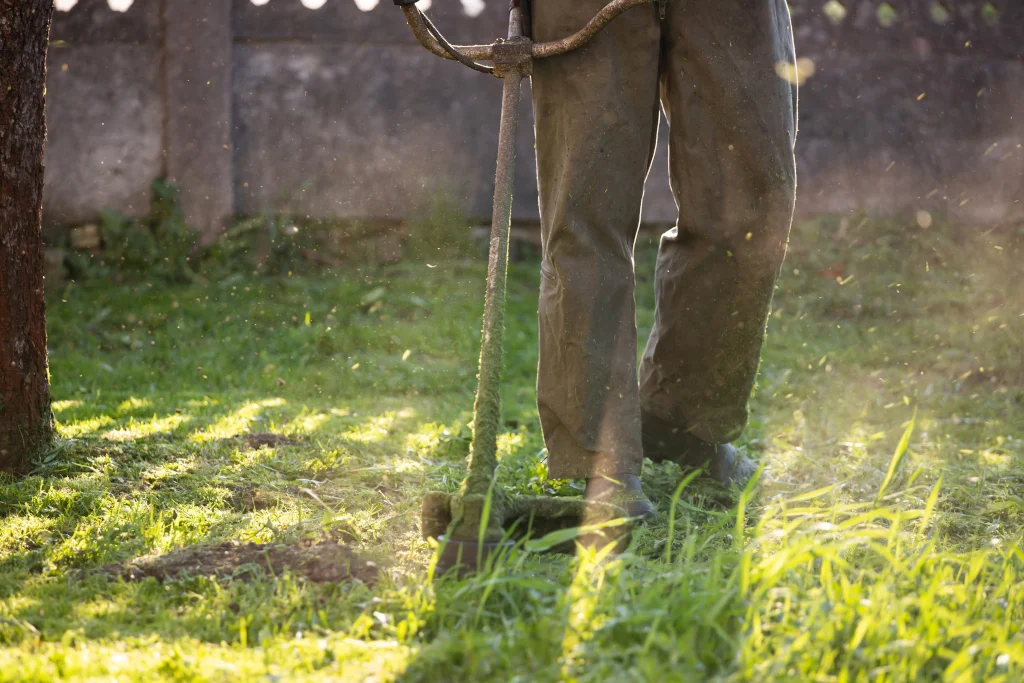
Protect The Grass From Pests
For the first few weeks, you must safeguard your grass seedlings if you reside in an area where slugs and snails are a common problem. Placing plastic bottles on top of any relatively tiny patches of bare ground on your lawn is the best approach to protect them. For more details, see my previous post, Protecting Young Plants With Plastic Bottles ( Slug & Snail Proof ). On the other hand, you must use slug pellets if your grass has numerous barren places or one particularly huge bald region.
Slug pellets are effective at killing slugs and snails but have the drawback of working slowly. After ingesting the slug pellets, a slug or snail has up to an hour before the poison begins to affect it. Slugs and snails will just consume the grass seeds during this period. In this situation, I would personally advise beginning to apply slug pellets to the barren section of the lawn about 2-3 weeks before you plant the grass seeds. Doing so will make it much easier to limit the number of snails.
Sow The Grass in Fall
Although I am aware that you want to fill in your bare places on the lawn as soon as possible, it is crucial to sow the grass seeds in the fall if you have a lot of dry patches. Check the date of the first frost in your area, then plant the grass seeds around 50–60 days beforehand. However, if you have a little bare patch on your lawn, you may still plant the seeds in the summer as long as you remember to keep the soil moist for the first few weeks.
Final Thoughts
As you can see, it’s not that hard to get grass to grow in bare spots. The topsoil needs to be rebuilt most of all because that is where the grass seedlings will truly grow. If you only rake in the grass seeds in an eroded area of your soil, the seedlings won’t be able to survive, and you won’t get any results.
FAQ
- What causes bare spots in a lawn?
Bare spots are usually caused by soil erosion, compacted ground, poor drainage, pests, over-fertilization, or high foot traffic. - Can I just add grass seed to bare spots?
No. Seeds won’t grow well on compacted or depleted soil. Aeration and composting are crucial before seeding. - How long should I wait after composting to add grass seed?
Wait about 1–2 months to allow mulch and compost to decompose and enrich the soil. - What type of mulch works best?
Use fast-decomposing organic mulches like grass clippings, hay, or straw to rebuild topsoil quickly. - What’s the best time to plant grass seed?
Fall is ideal—about 2 months before the first frost. For smaller patches, summer works if the soil stays moist.
Get our newest articles every week
One short email a week with our newest self-reliance and off-grid articles. Free, and you can unsubscribe at any time.
We use Mailchimp to send this email. See our privacy policy.