This post contains affiliate links. If you buy through them, we may earn a commission at no extra cost to you. Learn more.
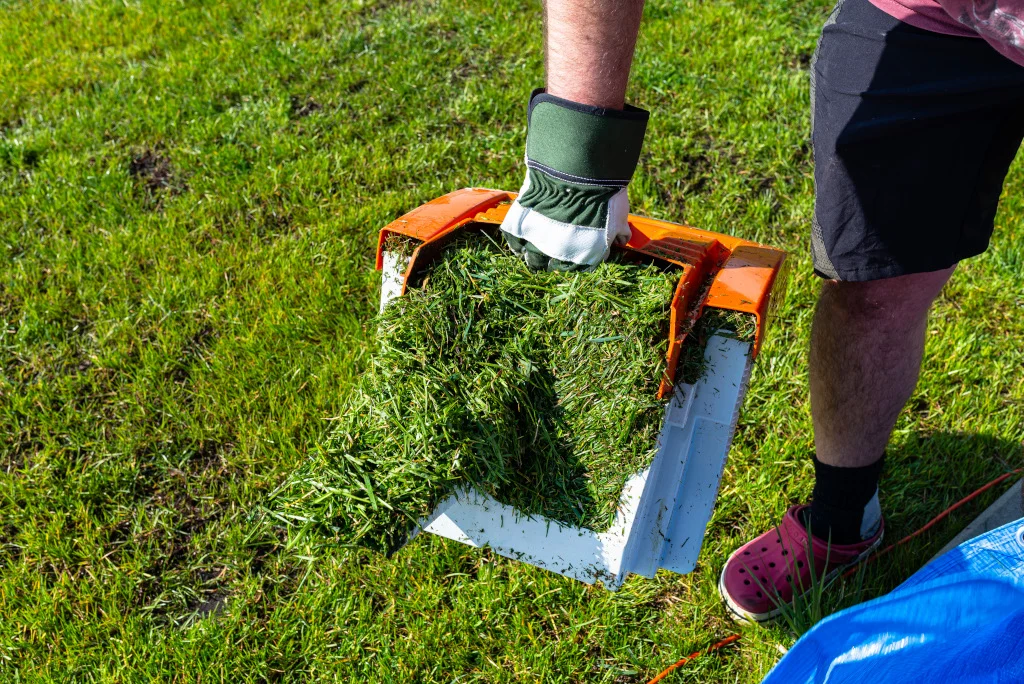
Grass clippings make excellent, nutrient-rich mulch—and they’re completely free! When applied correctly, they retain soil moisture, suppress weeds, and feed your plants naturally. This guide covers everything you need to know to mulch effectively using grass clippings.
Why Use Grass Clippings As Mulch?
Grass clippings cool the soil, retain water, and can replace up to 25% of nutrients removed by plant growth. Best of all, they’re abundant and cost nothing if you already mow your lawn. Compared to commercial mulches, grass clippings are an eco-friendly, low-effort alternative that supports a healthier garden ecosystem.
How To Mulch With Grass Clippings (Step-by-Step)
1. Spread Around Plants, Not On Them
Keep clippings 1–2 inches away from plant stems. Fresh clippings are high in nitrogen, which helps fertilize but can burn stems on contact.
2. Layer Correctly
- Hot climates: 6–8 inches thick
- Mild climates: 2–4 inches thick
Too little mulch won’t insulate or retain moisture. Too much leads to anaerobic rot, bad odors, and black, compacted layers.
3. Fresh vs. Dried Clippings
Fresh green clippings contain more nutrients and moisture, making them ideal for most gardens. However, avoid using them too thickly, especially around plants that need well-drained soil like blueberries. Dried clippings are fine too—just be sure to water them after application.
4. Always Avoid Pesticides
Never mulch with grass that’s been treated with pesticides or herbicides. Stick to your own untreated lawn or use clippings treated only with organic solutions like Trifecta Crop Control.
5. Water After Mulching
Moistening the mulch helps speed decomposition and keeps it from blowing away. This step is essential with dried clippings, optional with fresh ones.
6. Growing Seeds in Grass Clippings
Leave a mulch-free area directly above planted seeds to allow germination. Once seedlings sprout, gently mulch around them—but never incorporate clippings into the soil at this stage.
7. Creating Soil With Grass Clippings
Over time (1–3 years), mulching with grass clippings can enhance poor soil structure. Be patient—this method improves topsoil gradually and is especially helpful in barren or degraded garden areas.
In More Details
Mulching with grass clippings is a great way to protect your plants and enrich the soil with nutrients. It’s also easy to do and completely free (as long as you have some grass)! This article will walk you through why you should be mulching with grass clippings!
If you’ve been throwing away your grass clippings, you’re missing out! Seriously, you have a great opportunity to use these for your garden. Grass clippings will add essential nutrients to the topsoil! You will simply replenish the soil’s lifecycle, and your plants will be grateful.
Grass clippings are easy to use for mulch! You just place them around the plant, ensuring they don’t touch the stems. Both fresh and dried grass clippings can be used as mulch. I recommend using ones that don’t have pesticides on them!
Want to read more about mulching? We have complete guides on just about every mulch you can think of!
Why Use Grass Clippings As Mulch?
Fresh grass clippings serve as a great mulch because they chill the root zone, retain moisture, and replenish up to 25% of the nutrients that plant development takes from the soil. The additional benefit of using grass clippings as mulch is that it eliminates one more tedious horticultural task.
Although other mulches do these same things, most people have grass clippings in their yards. I think most people agree that a free solution is always best, even if it takes a bit more work. It’ll probably be more rewarding as well!
Step-by-Step on Mulching With Grass Clippings
Put Grass Clippings Around Plants
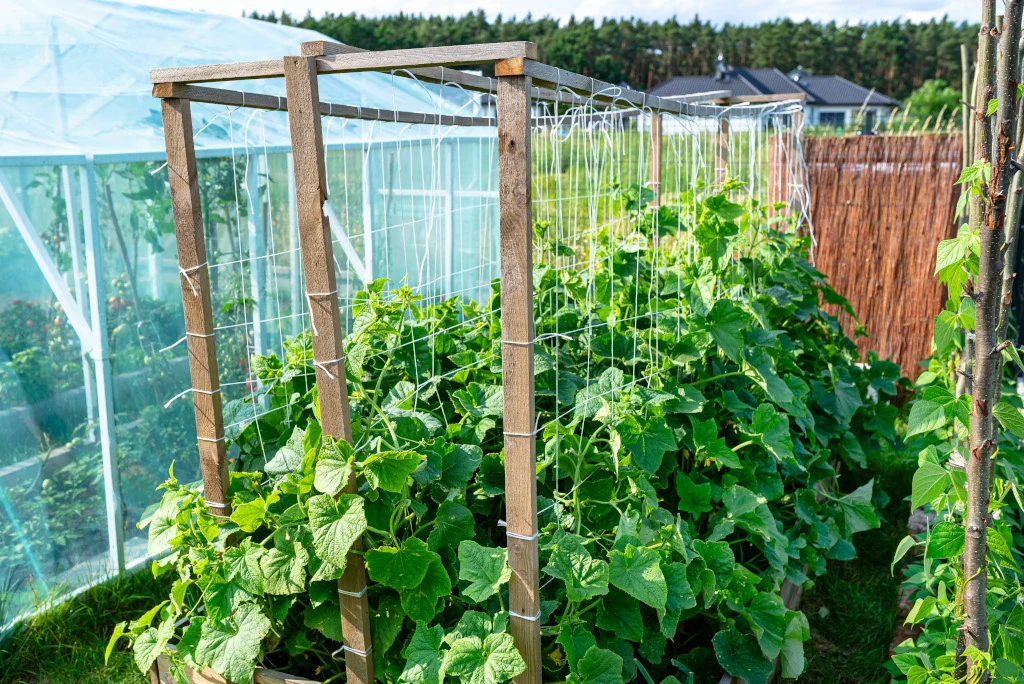
Whether growing flowers, bushes, fruit trees, or vegetables, it is crucial not to let the grass clippings touch the plant stems. The high nitrogen content of grass clippings is good for the plants, but direct contact could harm them as the nitrogen decomposes.
To prevent the grass mulch from coming into direct contact with the plant stem, you will need to create a gap between the stem of the plants and the mulch.
Add A Few Layers
The amount of mulch that should be applied varies depending on the temperature and whether you are using fresh or dried grass clippings. Use a thick layer of mulch—roughly 6 to 8 inches thick—if your home is in a hot climate. You can get away with a layer 2-4 inches thick if your region is a moderate temperature and receives a lot of water.
If you layer the clippings too thinly, they will not be able to retain cool temperatures and water. However, if you lay the clippings too thickly, the bottom layer will compact, and anaerobic bacteria will start to take control. This is the last thing you want! If you begin to smell rot and the layer of grass clippings begins to resemble carpet and become black, you have probably laid the mulch far too thickly.
Dried Clippings or Fresh?
Most people will advise drying the grass clippings before using them as mulch. This couldn’t be further from the truth, though. In my experience, green grass clippings are superior to dried-out grass clippings. Green grass clippings are far richer in nutrients and water retention. Still, if you spread them too thickly, the added wetness may pose a problem for some plants, particularly blueberries, which like soil that drains well.
Green grass clippings will turn yellow within a few days. Within a few weeks, they will completely decompose. How quickly they break down and replenish the essential nutrients in your plants relies largely on the local climate, how frequently you water them, and how frequently it rains where you live.
Avoid Pesticides
Grass cuttings that have been sprayed with pesticides or herbicides should not be used. These contain dangerous chemicals, and if they get into the ground, they’ll either prevent your plants from growing normally or kill them completely. Most of the time, you should use your own grass clippings as mulch because other people’s grass clippings can include pesticides or herbicides.
You can use natural pesticides on your grass, however. These should not impact your soil or plants. I recommend using the Trifecta Crop Control, a completely natural pesticide that is vegetable and fruit-friendly!
Water Your Grass Clipping Mulch
Many people tend to scatter the grass clippings around their plants and completely disregard them. However, you’ll need to water the clippings directly after you place them. This is crucial if you utilize dried-out grass clippings, and there isn’t much moisture where you live. Watering the clippings will speed up the decomposition process and allow the clippings to release nutrients.
This step can be skipped if you use green grass clippings because they already have adequate moisture. However, dried-out grass clippings will have little to no water, so you should water them. You should also do this if you live in a region with frequent winds.
Grow Seeds in Grass Clippings
Mulching with grass clippings is also very helpful when starting plants from seeds. Simply, make space around your seeds without any mulch on top. Make sure they are not covered by grass mulch because some seedlings struggle greatly to break through it. It is crucial to avoid incorporating the grass mulch into the soil since the extra nitrogen in the mulch may stop the growth of the seeds.
I recommend growing blueberries in grass clippings. It is a great choice for beginner gardeners to grow!
Add Soil to The Grass
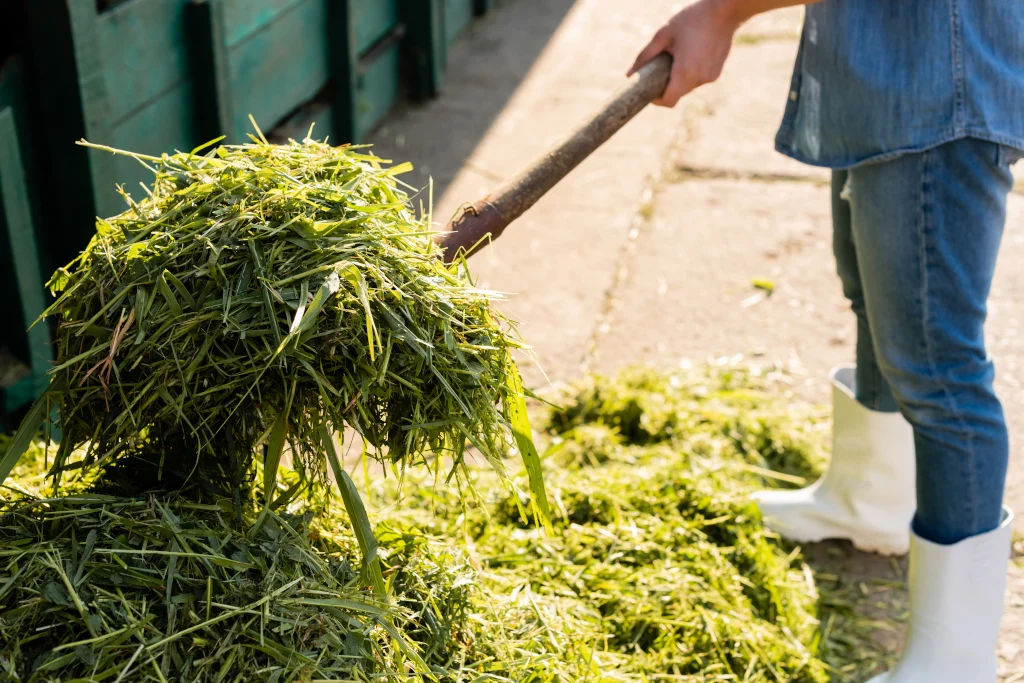
Although it may take some time before you can create soil with grass clippings, it can be done! In general, it takes about a few years. However, this does not mean that your plants will not benefit from the mulch of grass clippings; on the contrary, they will. It will just take some time to improve the soil with only grass clippings if you have a sizable area where little is growing because of bad soil.
Final Thoughts
As you can see, mulching using grass clippings is simple; just remember to moisten the mulch before using it. In this method, the mulch won’t be blown away by the wind, and the water will hasten the rotting process.
FAQ
- Can I use grass clippings straight from mowing?
Yes, as long as they’re free from pesticides and not applied too thickly. Let them dry for a few hours if you’re unsure. - Do I need to turn or replace the mulch?
Grass clippings decompose quickly. You can add more every 1–2 weeks during the growing season to maintain coverage. - Is mulching with grass good for all plants?
Most plants benefit, but avoid mulching directly around delicate stems or plants that prefer dry conditions like lavender or rosemary. - How can I tell if I’ve used too much mulch?
If the mulch turns black, smells rotten, or mats together, it’s too thick. Rake and thin it out to restore airflow. - What if I don’t mow often?
You can still use small batches of clippings. Consider mixing them with leaves or straw for larger mulch coverage.