This post contains affiliate links. If you buy through them, we may earn a commission at no extra cost to you. Learn more.
Quick answer: A reliable off-grid backup system combines solar panels, an MPPT charge controller, a LiFePO4 battery bank, a pure sine wave inverter and a backup generator. Size it by adding up your daily watt-hours, then plan for at least two days of battery storage and a generator for long cloudy spells.
As the world shifts toward sustainability and energy independence, more homeowners are looking for ways to sever ties with the traditional utility grid. Whether you are building a remote cabin or seeking a fail-safe backup for your primary residence, an off-grid backup system offers peace of mind and environmental benefits.
This guide will walk you through the essential steps to design and install a system that won’t leave you in the dark.
What Does Off-Grid Truly Mean?
An off-grid system is an island. Unlike “grid-tied” systems that feed power back to the utility, an off-grid setup must be entirely self-sufficient. It must generate electricity (usually via solar, as the U.S. Department of Energy’s solar guide explains), store it (in batteries), and manage it effectively to cover your needs 24/7, regardless of weather conditions.
The Foundation: Calculating Your Energy Needs
You cannot build a reliable system without knowing your load profile. Over-sizing leads to wasted money; under-sizing leads to blackouts.
Step 1: List every appliance.
Step 2: Note the wattage of each.
Step 3: Estimate how many hours each runs per day.
Sample Energy Requirement Table
| Appliance | Wattage (W) | Hours/Day | Daily Watt-Hours (Wh) |
| LED Light Bulbs (5) | 50W (total) | 6 | 300 Wh |
| Laptop/Workstation | 100W | 4 | 400 Wh |
| Energy-Efficient Fridge | 150W | 8 (cycling) | 1,200 Wh |
| Phone Chargers (2) | 10W | 3 | 60 Wh |
| Total Daily Load | 1,960 Wh (1.96 kWh) |
Key Components: The Anatomy of the System
A reliable system is only as strong as its weakest link. Here are the core components:
Solar Panels
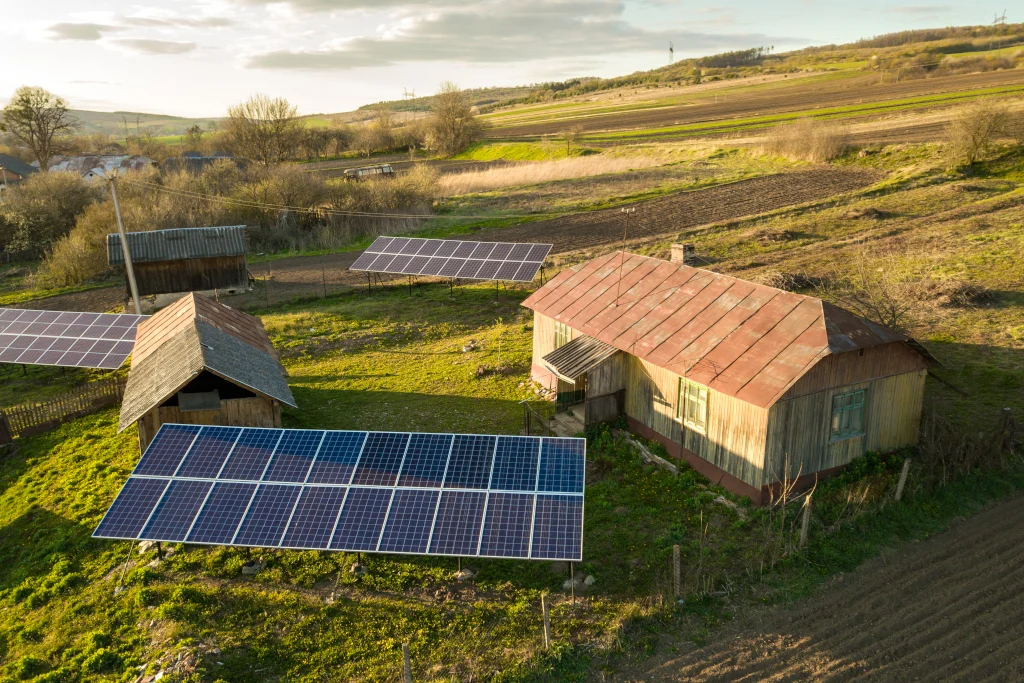
The “engine” that captures photons and converts them into DC electricity. Not all panels are created equal. Today, the market has shifted toward high-efficiency technologies that perform better in real-world (non-ideal) conditions.
Monocrystalline (The Standard): Best for most users. They are made from single-crystal silicon, making them the most efficient (typically 20-23%). They perform better in low-light conditions than cheaper alternatives.
Bifacial Panels (The Pro Choice): These have glass on both sides and capture sunlight reflected off the ground. If you are mounting panels on the ground (especially over sand, gravel, or snow), bifacial panels can increase your energy yield by up to 30%.
TOPCon & Back-Contact Panels: These are the “premium” options on the market. By relocating electrical connections to the back of the panel, they eliminate shading on the front, thereby increasing efficiencies to approximately 25%.
Editor’s tip: For off-grid living, Monocrystalline PERC panels offer the best balance of cost and performance. If you have limited space, consider investing in Back-Contact panels to maximize the power output of your roof.
Charge Controller
The “brain” that prevents your batteries from overcharging. MPPT (Maximum Power Point Tracking) controllers are the gold standard for efficiency. When buying a Charge Controller, you will see two acronyms. Always choose MPPT (Maximum Power Point Tracking) for off-grid living.
- PWM is like a simple switch; it wastes any “extra” voltage your panels produce.
- MPPT is like a smart transmission in a car; it converts excess voltage into extra amperage, increasing your charging efficiency by up to 30% in cold or cloudy weather.
Detailed Planning Table: Pro-Level Setup
If you were designing a reliable backup for a modern 2-bedroom off-grid home, it would look like this:
| Component | Specification | Why? |
| Solar Array | 3,000W (7 x 430W Panels) | Oversized to ensure charging even on cloudy days. |
| Charge Controller | 80A – 100A MPPT | Handles high current and maximizes winter harvest. |
| Battery Bank | 15kWh – 20kWh Lithium | Provides ~3 days of “autonomy” for essential loads. |
| Inverter/Charger | 5,000W Pure Sine Wave | Can start “heavy” motors like well pumps or fridges. |
| Generator | 5kW Propane Inverter | Quiet, reliable, and fuel stays fresh indefinitely. |
Battery Bank
Think of your battery bank as a “bank account” for energy. Your panels “deposit” energy during the day, and your appliances “withdraw” it.
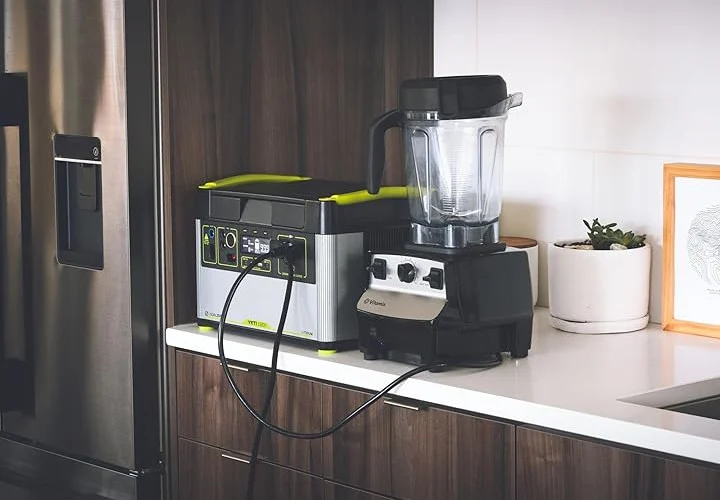
- The Chemistry Choice: Lithium (LiFePO4): These are the gold standard. They can be discharged to 80-90% of their capacity without damage and last for 3,000+ cycles.
- Lead-Acid (AGM/GEL): Cheaper upfront, but can only be discharged to 50%. If you pull more, you permanently damage the battery.
- The Process:
1. Charging: The Charge Controller takes raw power from the panels and “slow-drips” it into the batteries to avoid overheating.
2. Monitoring: A Battery Management System (BMS) (built into lithium batteries) balances the individual cells to ensure one doesn’t wear out faster than the others.
3. Storage: Energy is stored as DC (Direct Current).
Sizing Your Power Bank (Example)
| Target Storage | Lead-Acid Requirement | Lithium (LiFePO4) Requirement |
| 10 kWh Usable | 24 kWh (due to 50% discharge limit + losses) | 12.5 kWh (due to 80% discharge limit) |
| Weight | ~1,200 lbs | ~250 lbs |
| Lifespan | 3–5 years | 10–15 years |
Inverter
The inverter is the “heart” of your off-grid system. While solar panels generate the energy, the inverter converts that energy into the form your house actually uses. Choosing the wrong one can lead to “dirty” power that damages electronics or a system that trips every time the refrigerator kicks on.
Here is a detailed breakdown of inverter types, features, and the math required to size one correctly.
Inverter Types: Finding the Right Match
For off-grid living, you generally choose between three main architectures:
- Off-Grid Inverter Charger (The Industry Standard): This is the most popular choice for dedicated off-grid homes. It is a “bi-directional” device.
- The Benefit: It doesn’t just convert DC to AC; it also has a built-in battery charger. If your batteries are low and you plug in a generator, the inverter automatically switches to “Charge Mode” to top off your batteries.
- Hybrid Inverters: These are designed to work with both the grid and batteries.
- The Benefit: They are “all-in-one” units that often include the solar charge controller inside the same box. They are great for “partial” off-grid living, where you still have a utility connection but want to prioritize solar.
- Standalone (String) Inverters: These only convert power in one direction (DC to AC).
- The Trade-off: They are simpler and cheaper, but they cannot charge your batteries from a generator or the grid. You would need a separate, dedicated battery charger for backup.
The Waveform: Pure Sine vs. Modified Sine
This is the most critical technical choice you will make.
- Pure Sine Wave (The Only Real Choice): This creates a smooth, wave-like electrical signal identical to (or better than) the power from a wall outlet.
- Required for: Fridges, microwaves, bread machines, variable-speed power tools, and sensitive electronics like laptops or CPAPs.
- Modified Sine Wave (The “Budget” Choice): This creates a “blocky,” stepped waveform.
- The Risk: While cheaper, it makes motors run hotter and 20% less efficiently. It can cause a visible “buzz” in audio equipment and “lines” on older TV screens. In the long run, it can shorten the lifespan of your appliances.
Editor’s tip: The price gap has narrowed significantly. Never buy a modified sine wave inverter for a permanent home; the risk to your expensive appliances isn’t worth the small savings.
Sizing for “Continuous” vs. “Surge” Loads
When you look at an inverter’s spec sheet, you’ll see two wattage numbers. Understanding the difference is the key to a reliable system.
- Continuous Rating: The amount of power the inverter can provide indefinitely. (e.g., 3,000W).
- Surge (Peak) Rating: The amount of power it can provide for a few seconds (usually 2x the continuous rating).
- Why it matters: Appliances with motors (fridges, well pumps, A/C units) require a massive “kick” of energy to start—often 3 to 7 times their running wattage.
Surge Calculation Table
| Appliance | Running Watts | Surge Factor | Required Startup Watts |
| LED Lights (10) | 100W | 1x | 100W |
| Energy-Star Fridge | 150W | 5x | 750W |
| Deep Well Pump | 800W | 7x | 5,600W |
| Total Max Surge | 6,450W |
Backup Generator
In December or during a week of rain, a small propane or gas generator can top off your batteries.
Selecting the Best Backup Generator
A generator is your safety net for the dark months (November–January).
Dual-Fuel Inverter Generators: For DIY setups, a portable Gas/Propane Inverter (like those from Champion or EcoFlow) is ideal. They produce “clean” power that won’t fry your sensitive electronics.
Propane (Best for Reliability): Propane doesn’t “go bad” or gum up carburetors. You can store a 500-gallon tank for years. It burns cleaner and requires less maintenance.
Diesel (Best for Heavy Use): If you are running a workshop or a large homestead, diesel engines are “workhorses.” They are more fuel-efficient but much louder and more expensive to purchase.
System Sizing and Planning
To ensure reliability, you must plan for “Days of Autonomy”, the number of days your system can run without any sun.
Sample Planning Table (Small Cabin Example)
| Component | Goal | Recommendation |
| Solar Array | Cover daily use + 20% | 800W – 1000W of panels |
| Battery Bank | 2-3 Days of Storage | 5kWh – 7kWh capacity |
| Inverter | Handle Peak Surge | 2000W Pure Sine Wave |
| Safety | Protection | 40A Breakers / Surge Protectors |
Installation: Putting it Together
- Mounting: Place panels where they get maximum southern exposure (in the Northern Hemisphere). Ensure they are angled correctly for your latitude.
- Battery Setup: Place batteries in a temperature-controlled, ventilated area. Wire them to reach your desired voltage (usually 12V, 24V, or 48V).
- The Hub: Mount your charge controller and inverter close to the batteries to minimize voltage drop in the wires.
- Wiring & Safety: Always use the correct gauge of wire for the current (Amps) you are running. Install fuses between the panels and controller, and between the battery and inverter.
Maintenance for Longevity
A “reliable” system is a maintained system.
- Cleanliness: Dust and snow can reduce panel efficiency by 20% or more.
- Monitoring: Use a battery monitor to ensure you aren’t discharging your batteries too deeply (keep Lead-Acid above 50%, Lithium can go to 10-20%).
- Connections: Check for loose wires or corrosion every six months, especially in high-vibration or outdoor environments.
The Bottom Line
Setting up an off-grid backup is an investment in freedom. By accurately calculating your load and selecting high-quality components, such as LiFePO4 batteries and MPPT controllers, you create a system that isn’t just a backup – it’s a sustainable way of life.
Frequently Asked Questions About Off-Grid Backup Systems
How big should my battery bank be?
Multiply your daily energy use by the number of days you want to run without sun, then divide by the battery’s usable depth of discharge. For example, 5 kWh per day for 2 days on LiFePO4 batteries (about 90% usable) needs roughly an 11 kWh battery bank.
Do I still need a generator with solar and batteries?
For most homes, yes. A generator covers long stretches of cloudy weather and heavy loads, and many inverter-chargers can start it automatically when the batteries run low, so you rarely have to think about it.
Is there still a federal tax credit for off-grid solar and batteries?
No, not for homeowner systems installed now. The 30% Residential Clean Energy Credit does not apply to equipment placed in service after December 31, 2025, according to the IRS. Check your state and utility for any remaining local incentives.
What’s the difference between a backup system and a fully off-grid system?
A backup system keeps essential circuits running during outages and can be smaller, while a fully off-grid system is your only power source and must be sized for every load, every season. The same components are used in both; the difference is mainly capacity and autonomy.
How often should I maintain an off-grid backup system?
Check your monitoring app or display weekly, clean the panels and inspect wiring every few months, tighten and check connections every six months, and run your generator under load about once a month so it starts when you need it.
Get our newest articles every week
One short email a week with our newest self-reliance and off-grid articles. Free, and you can unsubscribe at any time.
We use Mailchimp to send this email. See our privacy policy.