
This post contains affiliate links. If you buy through them, we may earn a commission at no extra cost to you. Learn more.
Quick answer: For a permanent off-grid home, choose a custom GoGreenSolar kit; for RVs and vans, Renogy offers the best balance of price and durability; for simple emergency backup, Goal Zero is the easiest plug-and-play option; and for remote cabins, ECO-WORTHY is rugged and scalable. Look for LiFePO4 batteries in any kit you buy.
For those seeking true energy independence, off-grid living is no longer a fringe dream but a practical reality. Whether you are outfitting a remote cabin, a mobile tiny home, or a full-scale homestead, today’s market offers highly sophisticated off-grid solar panel kits that take the guesswork out of solar engineering.
For off-grid success in the US, the gold standard involves three pillars: high-efficiency monocrystalline panels, large-capacity LiFePO4 battery storage, and robust pure sine wave inverters.
Here are the best solar panel kits for off-grid living in the US this year.
Custom Off-Grid Solar Kits by GoGreenSolar
Best for: Full-sized homes and high-capacity demands.

GoGreenSolar remains the premier choice for homeowners who need a “done-for-you” engineering approach. Their kits are not one-size-fits-all; they provide custom design consultations to ensure your array matches your specific geographic location and peak load requirements.
- Components: Systems range from 4.8 kW to 21 kW, typically featuring high-efficiency SunSpark 330W (or higher) panels, Sol-Ark all-in-one inverters, and Fortress LiFePO4 battery banks.
- Support: They specialize in navigating the “paperwork” side of off-grid living, offering permit-ready plans and 25-year warranties.
- Investment: Expect to pay between $25,000 and $60,000+, depending on the scale and storage capacity.
2. Renogy Off-Grid Kits
Best for: DIYers, RVs, and entry-level tiny homes.
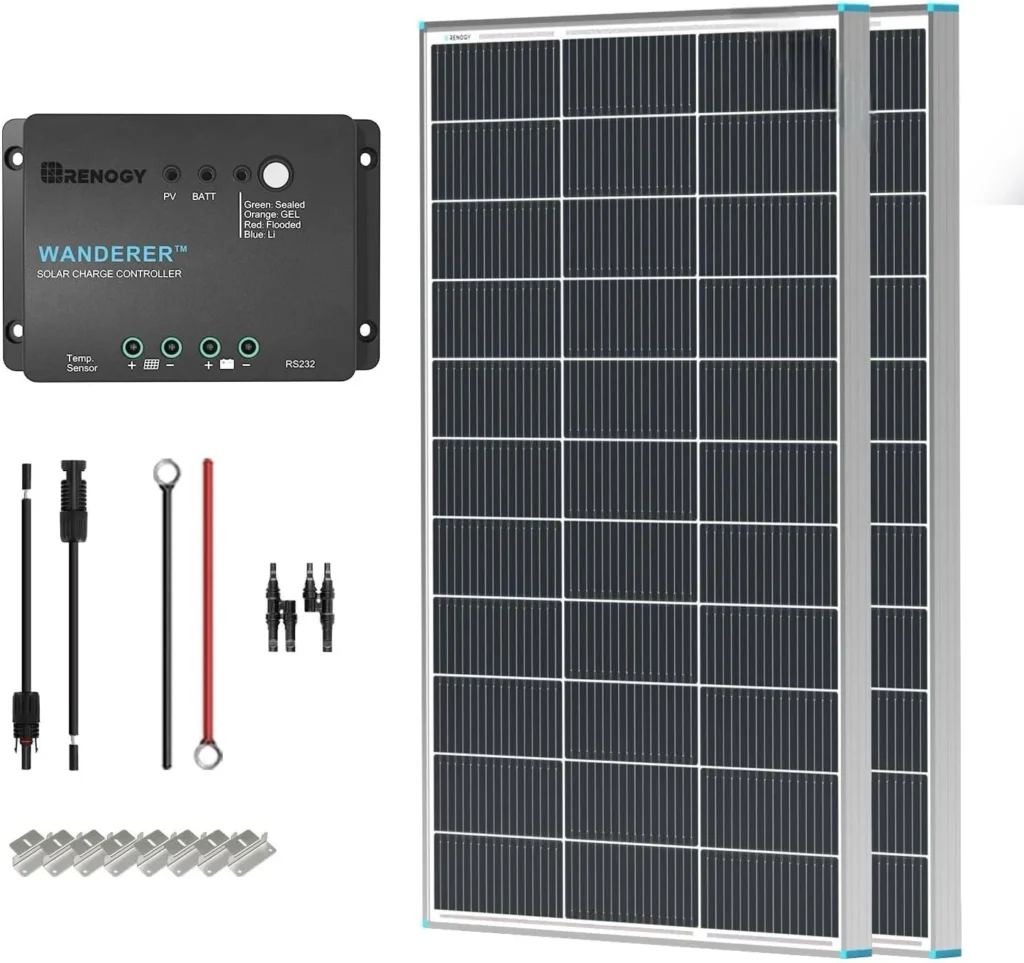
Renogy has solidified its reputation as the go-to brand for modular, affordable solar. Their kits are designed for the “weekend warrior” or the DIY enthusiast looking to power a van or a small cabin without a massive upfront investment.
- Scalability: Kits start as small as 100W–400W for basic needs, but their newer 3–15kWh Power Kits allow for significant expansion.
- Technology: They have pioneered “ShadowFlux” anti-shading technology, which allows panels to maintain high output even when partially obstructed by trees or roof vents.
- Investment: Very accessible, with starter kits ranging from $200 to $2,000, and larger integrated systems scaling up from there.
3. Goal Zero Off-Grid Systems
Best for: Portability, emergency backup, and “plug-and-play” simplicity.
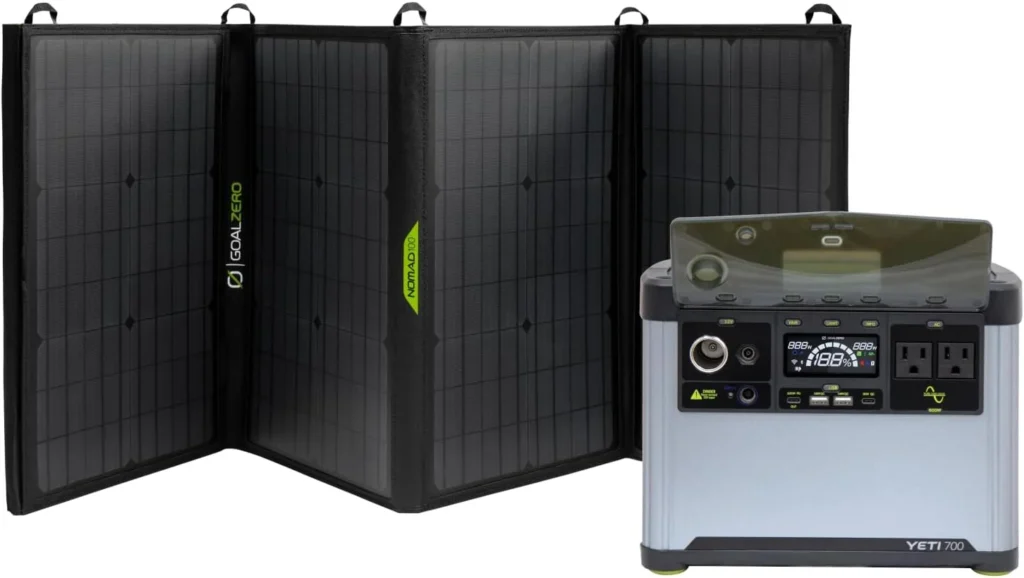
If you want to avoid complex wiring and electrical panels, Goal Zero is the industry leader in portable power stations. Their Yeti series serves as a mobile “brain” for your solar setup.
- The Powerhouse: The Yeti 300 and 1500 units use LiFePO4 chemistry, offering over 4,000 cycles (roughly 10 years of daily use).
- Integration: These systems can be integrated into a home’s electrical panel via a transfer switch (like the Haven 10) to back up essential circuits instantly.
- Investment: Pricing typically sits between $350 and $1,200+. While more expensive per watt than DIY kits, the ease of use and portability are unmatched.
ECO-WORTHY Off-Grid Solar Kits
Best for: Budget-conscious cabins and comprehensive Amazon-ready bundles.
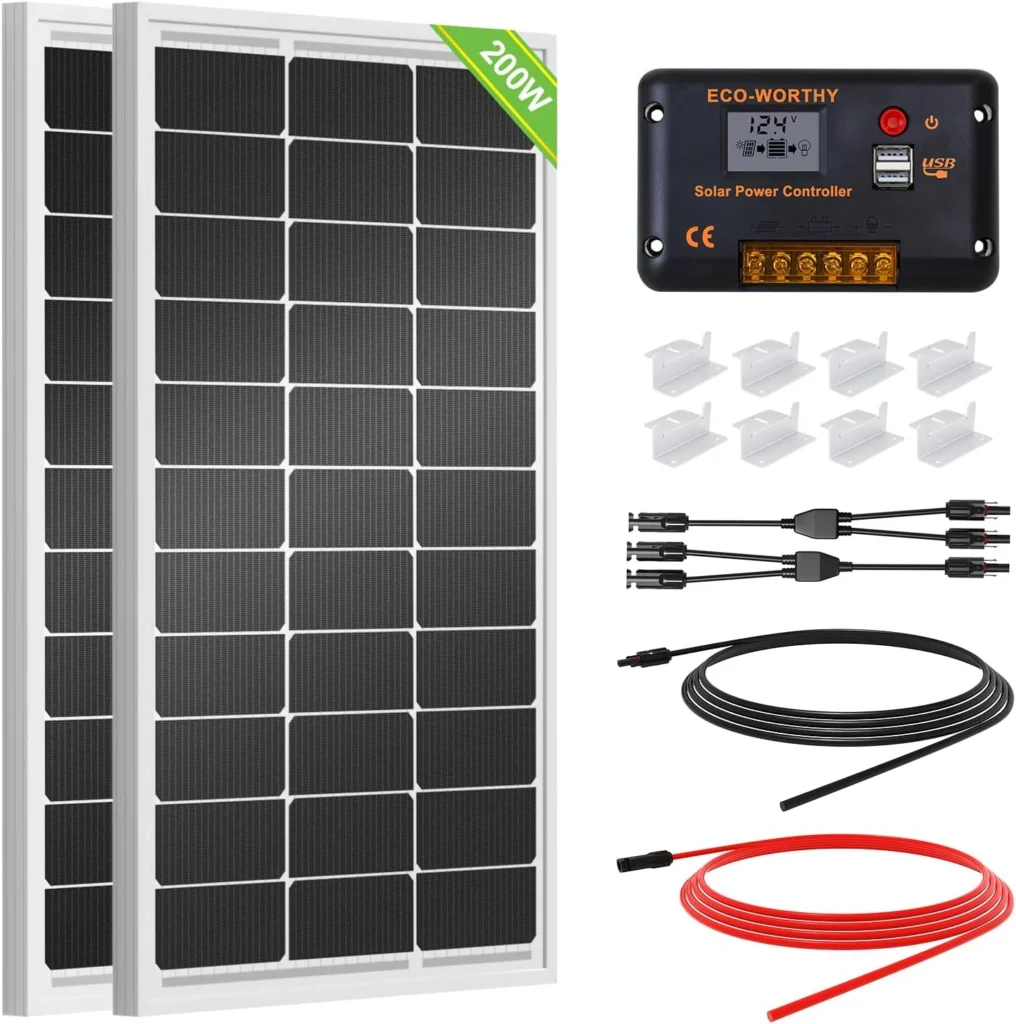
For those who prefer the convenience of Amazon’s ecosystem and are looking for a highly cost-effective complete setup, ECO-WORTHY is a top contender. Their kits are famous for bundling every single component needed from the panels down to the tray cables and Z-brackets.
- The Complete Package: A standout is their 400W 12V/24V Complete Kit, which frequently includes four 100W monocrystalline panels, a 40A MPPT charge controller, a 100Ah LiFePO4 lithium battery, and a 1100W Pure Sine Wave inverter.
- Performance: These kits are designed to produce roughly 1.6kWh of electricity per day (with 4 hours of sun), making them ideal for sheds, RVs, or small off-grid cabins powering lights, fans, and laptops.
- Investment: One of the most affordable entries into lithium-based solar, with complete bundles often found between $600 and $1,200 on Amazon, depending on the chosen battery and inverter capacity.
Key Considerations When Choosing Off-Grid Solar Panel Kits
Before clicking “buy,” evaluate these five critical factors:
- Energy Needs: Use a load calculator to determine your daily kWh usage. An average US home uses ~30 kWh/day, while an efficient off-grid cabin might only need 5–10 kWh.
- Inverter Quality: Ensure your kit includes a Pure Sine Wave inverter. Modified sine wave inverters are cheaper but can damage modern appliances and LED lights.
- Battery Type: Today, LiFePO4 (Lithium Iron Phosphate) is the only logical choice for full-time living. They last 5–10 times longer than lead-acid (AGM) batteries and can be discharged more deeply without damage.
- Expandability: Your needs will likely grow. Choose a system (like Renogy or Goal Zero) that allows you to “daisy-chain” more batteries or panels later.
- Warranty & Support: Off-grid systems are an investment in your survival and comfort. Prioritize companies with US-based technical support.
Summary & Recommendation
Selecting the right kit depends entirely on your lifestyle goals:
- For a Permanent Residence: Choose GoGreenSolar. The custom engineering and high-end Sol-Ark components are worth the investment for a system that “just works” like a traditional utility connection.
- For Mobile Living (RVs/Vans): Renogy offers the best balance of price and durability, especially with their newer flexible and anti-shading panels.
- For Emergency Backup or Simplicity: Goal Zero is unbeatable. It is the most user-friendly option for those who want to avoid high-voltage DIY wiring.
- For the Remote Cabin: ECO-WORTHY provides the rugged, scalable performance needed for locations where professional help isn’t just a phone call away.
Frequently Asked Questions About Off-Grid Solar Panel Kits
What size off-grid solar panel kit do I need?
Add up the daily watt-hours of everything you plan to run, divide by the peak sun hours where you live, and add about 25% for system losses. For example, a cabin using 5 kWh per day in an area with 4.5 peak sun hours needs roughly a 1.4 kW array.
Can I still get the federal tax credit for a solar kit?
Not for new installations. The 30% Residential Clean Energy Credit does not apply to any system placed in service after December 31, 2025, according to the IRS. Some states and utilities still offer their own rebates, so check locally before you buy.
Are LiFePO4 batteries worth the higher price?
For most off-grid homes, yes. LiFePO4 batteries last thousands of charge cycles, can be discharged much deeper than lead-acid, need no watering, and weigh far less, so they usually cost less over the life of the system.
Can I install an off-grid solar kit myself?
Small 12V and 24V kits for cabins, sheds and RVs are designed for DIY installation. Larger 48V systems, and anything wired into a home’s electrical panel, usually need a permit and inspection, and many owners hire a licensed electrician for that part.
How long do off-grid solar systems last?
Most solar panels carry 25-year power warranties, inverters typically last 10 to 15 years, and quality LiFePO4 battery banks often last a decade or more with proper care.
Get our newest articles every week
One short email a week with our newest self-reliance and off-grid articles. Free, and you can unsubscribe at any time.
We use Mailchimp to send this email. See our privacy policy.