Quick answer: Start homesteading in Tennessee in a rural county where land is cheap and rainfall is reliable. The state has a long growing season (USDA zones 6a to 8a), no tax on wages, and no statewide ban on off-grid living, though you will need an approved septic system and a licensed well driller.
Tennessee is one of the best states for homesteading in the entire country. And even though I live there, this isn’t my bias talking.
Tennessee receives high rainfall, has a long growing season, and has virtually no laws against homesteading or off-grid living. This is unlike some of its western counterparts, such as Colorado or Arizona.
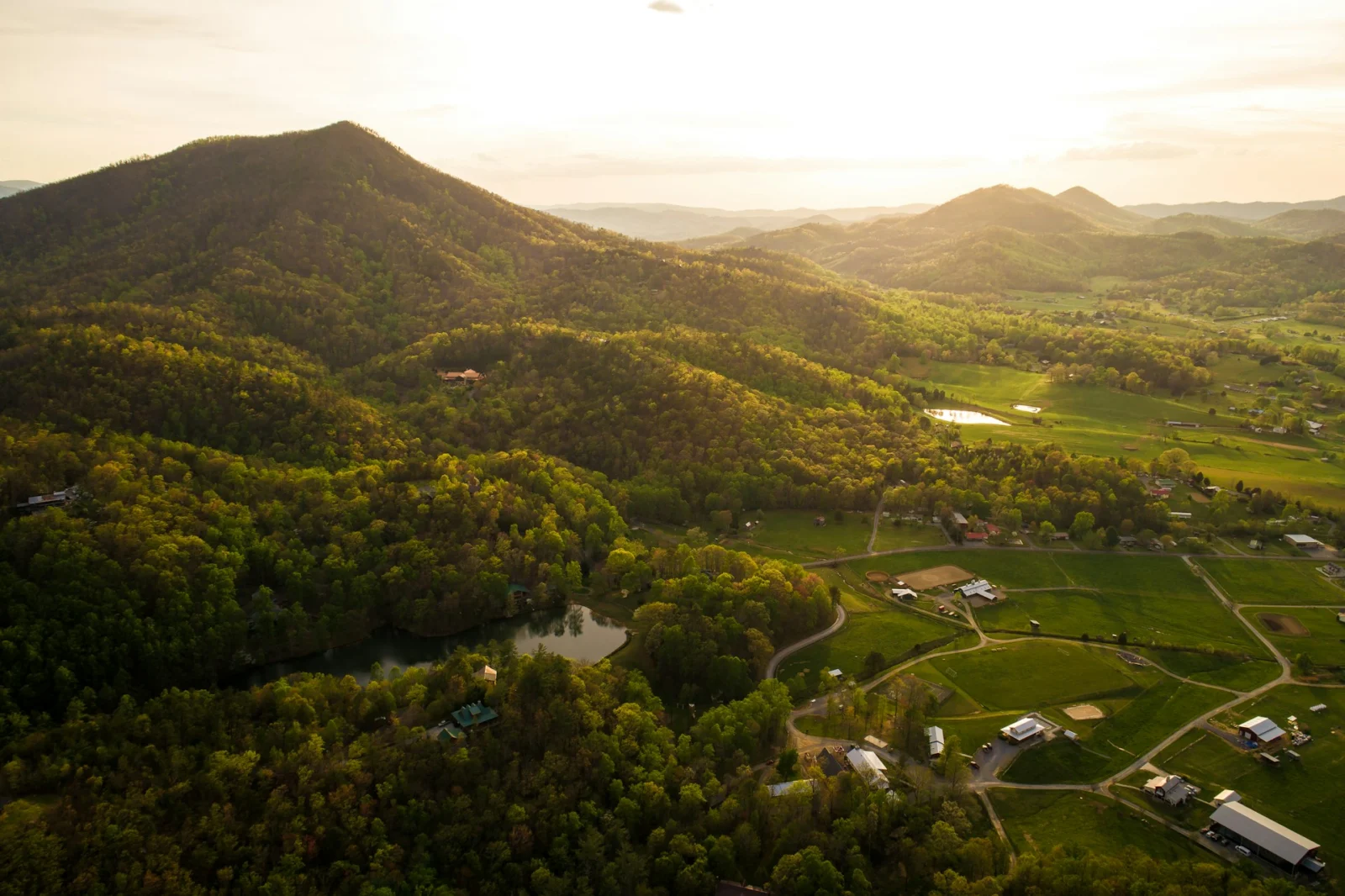
But it’s not the same everywhere. For example, I live in the eastern part of the state, in the Appalachian mountains. While we receive a ton of rainfall (I’m talking over 50 inches), the temperature can be more extreme. The weather is unpredictable, and yes, it snows more than in the flatlands in the western half of the state.
To keep things easy, this article will walk you through the best places to start homesteading in Tennessee. The best places to homestead in Tennessee are those with low population density, crime rate, and cheap land with few zoning laws. Some of the best counties for homesteading in Tennessee are Rutherford County, Washington County, Gibson County, Franklin County, Lincoln County, Perry County, Wayne County, and Marion County.
Lucky for you, we’ve written detailed guides on homesteading and off-grid living in every state. Find yours here. Or, if you’re interested in learning more about homesteading in Tennessee, here’s our full guide.
How We Picked:
To find the best counties for homesteading in Tennessee, we took a few factors into account. Here’s what we were thinking about:
- Crime Rate: We tried to find counties with the smallest crime rate. To be fair, Tennessee has a higher crime rate than the national average, but it’s mostly centered around areas such as Memphis, Nashville, and Knoxville. Most places ideal for off-grid living have a smaller crime rate (or at least fewer violent crimes).
- Low Cost of Living: The cost of living was the second thing we looked at. We wanted somewhere that was relatively cheap. Thankfully, Tennessee has no income tax, and even its sales tax is relatively low at 7%. The average cost of living in the entire state is only $37,499 per year. Compared to other states, especially those out west, this is extremely low.
- No Zoning Restrictions: When homesteading, the last thing you want is a property that isn’t zoned for farmland or residential. The counties we’ve chosen have the least restrictions (although it can be a case-by-case basis for some properties). Typically, the most rural counties are the ones with the fewest restrictions.
- Cheap Property: Tennessee has been known for its inexpensive land. However, that’s in the process of changing. With a steady flow of people moving in (we’re talking over 83,000 people in 20222 alone), cheap property is becoming hard to find.
Below, you can find a map of all the counties in Tennessee to familiarize yourself with the region. As we mentioned, we’d recommend staying away from the major cities, such as Nashville (Davidson County), Memphis (Shelby County), Knoxville (Knox County), and Chattanooga (Hamilton County).
Here are the Best Counties for Homesteading in Tennessee
So, you know what we looked for and how we selected the counties. Now it’s time to reveal our options.
As always, we recommend visiting each county, state, and general area before making the move. No matter how good an article is (and we think this one is pretty good), it won’t give you the true experience.
Gibson County
In the western portion of the state, Gibson County is one of the best counties in the state for homesteading. The climate is suitable for off-grid life, and there is an excess of rainfall each year (54 inches in 2022).
Furthermore, due to the low population density, the price of property and the cost of living in Gibson County are comparatively modest. Roughly 50k people live in an area of 603 sq mi, which is big.
More specifically, we recommend looking at the western side of this county. Additionally, if you’re a fan of small towns, Gibson is home to the cute town of Milan, Tennessee. I know, confusing name…
| Average Rainfall | 52 inches |
| Population | 54,541 |
| Violent Crime Rate | 26.8 |
| Median Property Cost | $69,000 |
Franklin County
Franklin County is located in the southern portion of the state, has a medium population density, and, for the most part, offers everything you would need for homesteading. Currently, approximately 85k people are living in an area of 553 square miles. The cost of housing is lower than the statewide average, while the cost of living is just below the statewide average.
We will say, Franklin County is closer to the city, and a more ideal spot for someone who wants to homestead in close relation to city life. It’s perfect if you’re looking for a small farm to sell at the Farmer’s Market.
Additionally, like many places in Tennessee, Franklin County is blowing up. No, not literally. In 2022 alone, it grew by 7.5%. Wow.
| Average Rainfall | 53 inches |
| Population | 85,465 |
| Violent Crime Rate | 11.9 |
| Median Property Cost | $152,425 |
Lincoln County
Lincoln County is located in the southern section of the state. You will have no trouble finding adequate land for homesteading and living off the grid in this county.
Lincoln County has a low population density, with only about 35k inhabitants living in 570 square miles. The cost of living is lower than the statewide average, and it’s in a relatively rural area.
However, Lincoln County is a bit more expensive than some of the other options. However, if you can find the right spot, we’re sure you won’t be disappointed at homesteading there!
| Average Rainfall | 56 inches |
| Population | 35,907 |
| Violent Crime Rate | 5.1 |
| Median Property Cost | $229,000 |
Perry County
Perry County is located in the western section of the state and is ideal for those looking for dirt-cheap land. Thanks to the low population density, the cost of living, the property prices are some of the lowest in the state.
There are currently roughly 8k inhabitants living in 415 sq mi; even though this county is relatively tiny, you will have no trouble finding adequate acreage for homesteading.
Even though this county is tiny, the crime rate is a bit higher. That’s not to say this area is dangerous, but, like many places in the Southeast, there is an opioid problem.
| Average Rainfall | 43.1 |
| Population | 8,472 |
| Violent Crime Rate | 19 |
| Median Property Cost | $102,100 |
Wayne County
Wayne County is located in the southern region of the state and is one of the state’s largest counties. This is one of the best counties for homesteading in Tennessee because of its enormous size and low population density.
Wayne County contains roughly 17k people living in 734 square miles. Seriously, there’s nothing out there but farm land, rolling hills, and, yes, lots of cows. Your best chances for homesteading and off-grid life are in the county’s southern corner.
| Average Rainfall | 59 inches |
| Population | 16,409 |
| Violent Crime Rate | 16.5 |
| Median Property Cost | $179,900 |
Marion County
Marion County is located in the southern section of the state, where the cost of living and land prices are among the lowest. It’s dotted with mountains, rainfall, and a friendly small-town environment. Seriously, everyone knows everybody. Most people who grew up there have families who have lived in Marion County forever.
However, it’s still a popular place to move to. That’s because the county has a low population density, with approximately 28k people living in a 500-square-mile region.
| Average Rainfall | 56 inches |
| Population | 28,877 |
| Violent Crime Rate | 18.3 |
| Median Property Cost | $143,100 |
Final Thoughts on Homesteading in Tennessee
As you can see, there are numerous choices for off-grid living and homesteading in Tennessee. You need not be concerned about the higher crime rate than the national average if you stay away from the larger cities. The best thing about this state is that the cost of living is minimal. If you can find a cheap plot of land, you will have no trouble living off the grid or homesteading in this state.
Here’s my Complete Guide on Choosing the Best Land for Off-Grid Living.
Frequently Asked Questions About Homesteading in Tennessee
Is it legal to homestead off the grid in Tennessee?
Yes. Tennessee has no statewide ban on off-grid living. Every dwelling needs an approved septic or wastewater system permitted through the Tennessee Department of Environment and Conservation (TDEC), wells must be drilled by a licensed driller, and zoning and building codes are set county by county.
Can you collect rainwater in Tennessee?
Yes. There is no statewide restriction on collecting rainwater for gardens and livestock. If you plan to plumb rainwater into the house for drinking, local plumbing codes and treatment requirements apply, so check with your county first.
What growing zone is Tennessee in?
On the 2023 USDA Plant Hardiness Zone Map, Tennessee ranges from zone 6a in the highest parts of the Smoky Mountains to 8a around Memphis. Most of Middle Tennessee falls in zones 7a and 7b.
Does Tennessee have a state income tax?
Tennessee does not tax wages, and the Hall income tax on interest and dividends was fully repealed starting with the 2021 tax year. Combined with low land prices in rural counties, that keeps the cost of homesteading down.
Where should beginners start homesteading in Tennessee?
Start with a rural county where land is affordable and rainfall is reliable, such as the counties covered in this guide. Begin small with a vegetable garden and a few chickens, learn your soil and season, and expand to larger livestock once your water supply and fencing are in place.