This post contains affiliate links. If you buy through them, we may earn a commission at no extra cost to you. Learn more.
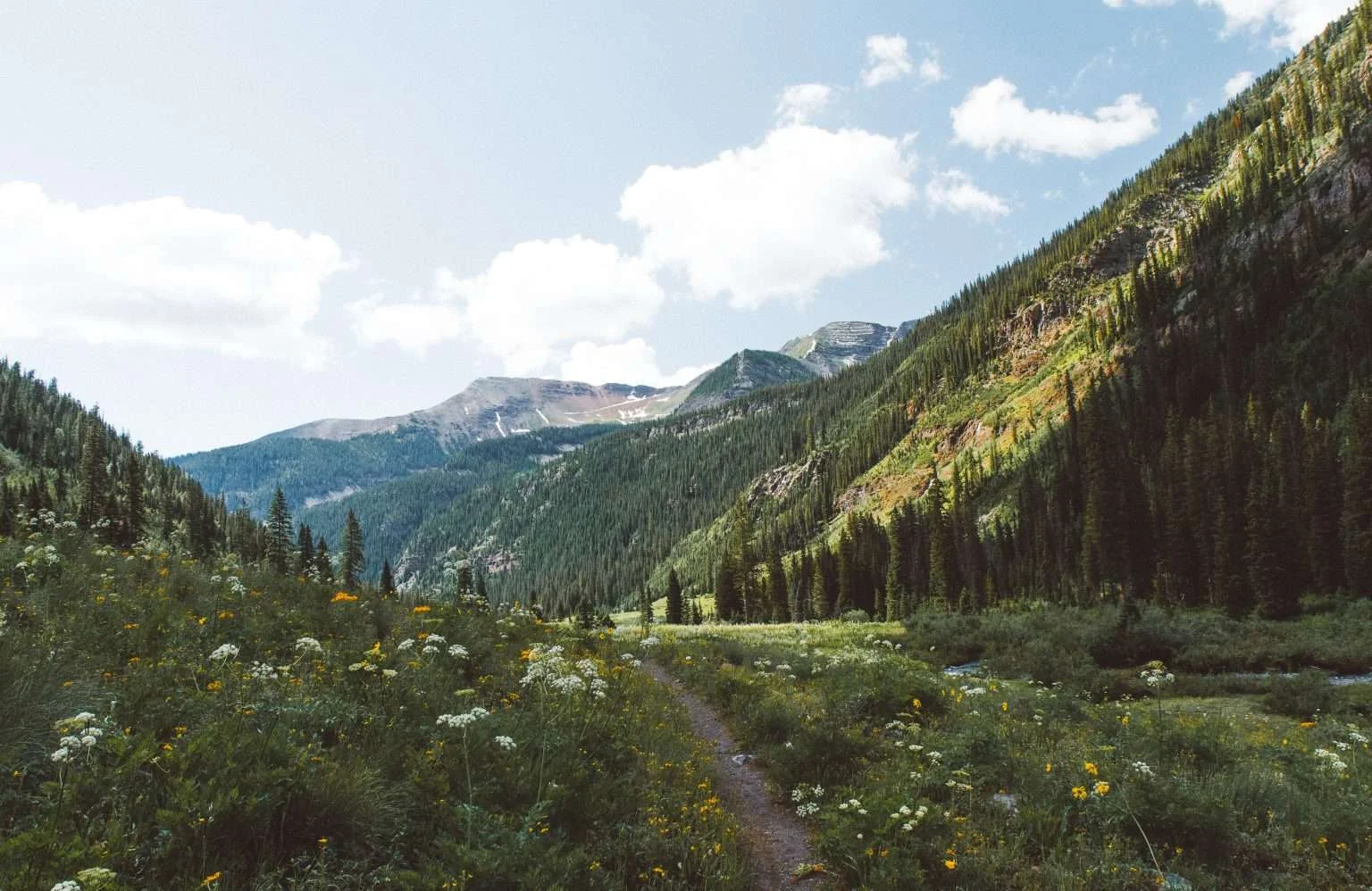
Living off-grid in Colorado is legal but very challenging due to strict rainwater collection limits, high housing costs, unpredictable weather, and limited water availability. While the state offers breathtaking scenery and opportunities for outdoor living, it is one of the toughest states for establishing a fully self-sufficient lifestyle.
General Overview
Colorado is known for its high peaks, snowy winters, and arid deserts. With a population of 5.75 million, the state has grown quickly in recent decades. Although off-grid living is possible, the higher cost of living and strict regulations can make it difficult compared to neighboring states.
Climate
- Summers: Average highs around 90°F, with frequent thunderstorms.
- Winters: Harsh, with 60–100 inches of snow and average temperatures near 30°F.
- Climate types: Continental, semi-arid, subarctic, and subtropical depending on location.
Farming and Crops
Colorado farmers mainly grow wheat, potatoes, beans, sugar beets, hay, and corn. Western areas have harsher elevations, requiring greenhouses or compost systems. Agriculture can be done but is not as straightforward as in other states.
Water Availability
Rainwater collection was once illegal and remains highly restricted. Residents can only store up to 110 gallons of rainwater. Groundwater is often scarce or contaminated, so many rely on hauled-in water or above-ground sources.
Wildlife
Colorado is home to bison, elk, black bears, mountain lions, and wild horses. Lakes and rivers provide trout, bass, salmon, and other fish species, though permits are required for hunting and fishing.
Off-Grid Power Options
- Solar: Federal tax credits apply, though no state-wide incentives exist.
- Wind: High winds in mountainous regions make small turbines effective.
Legal Considerations
Off-grid living is legal, but some counties (like Costilla) restrict camping or self-sufficient setups. Regulations on water collection are the main legal hurdle.
Infrastructure
Roads in Colorado are prone to damage from extreme temperature swings. Winter driving often requires 4WD vehicles and snow chains. Rural access can be limited after snowstorms.
Cost of Land and Living
- Land & Housing: 66% higher than the national average.
- Property Tax: Around 7.15%, with minor reductions in recent years.
- Cost of Living: Higher for housing and transport; slightly lower for healthcare and utilities.
Job Market
Unemployment sits at 3.4%, below the national average. The minimum wage is $12.56 and set to rise further. Job opportunities are stronger in cities but limited in remote areas.
Crime and Safety
Crime rates are slightly below the national average. Safe areas include Creede, Marble, and Florissant, while Pueblo and Denver rank higher in crime. Off-grid locations tend to be far from urban crime zones.
Natural Disasters
Colorado is prone to blizzards, droughts, flash floods, wildfires, and hailstorms. Emergency preparedness is critical for off-grid households.
In More Details
Colorado is one of the most beautiful states in the country. Known for its high peaks, incredible winter season, and arid desert, the state is truly untamed. However, this makes living off-grid in Colorado difficult, to say the least. The state has little rainfall and harsh conditions, making it the perfect place for the experienced outdoorsman.
Colorado has been rated the best state to live in for many years. With a population of 5.75 million people and a location near the heart of the country, Colorado attracts a large number of people looking to relocate. Colorado’s population was just under 4.13 million in 2000, and population growth has been quicker than ever in the last two decades.
General Statistics About Living Off-Grid in Colorado
Colorado may appear to be an ideal state for off-grid living at first glance. The truth is, off-grid living in Colorado can be very tough. Although living off-grid is completely legal, the biggest issue is that rainwater gathering was once illegal. Even now, there are limits and regulations on how much water can be collected. Furthermore, the 66 percent higher cost of housing makes a high entry fee for those looking to move to the state.
Colorado has 13 cities with populations exceeding 100,000, and the areas around these cities are densely populated. Denver, with a population of 695k inhabitants, is the state’s largest city. It is followed by Colorado Springs (457k), Aurora (363k), and Fort Collins (162k). Even though population density in some areas can be rather high, there are endless places that are empty—that’s the beauty of the West Coast.
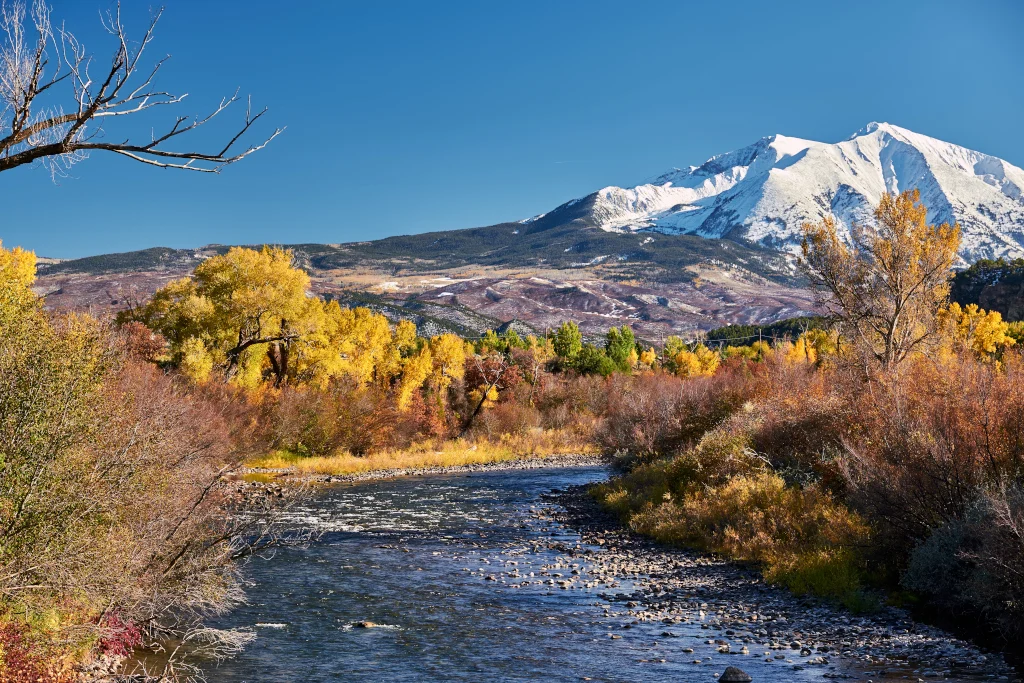
The Rio Grande National Forest, White River National Forest, San Juan National Forest, Arapaho and Roosevelt National Forests, and the Uncompahgre National Forest are just a few of Colorado’s national forests. If you enjoy the outdoors, Colorado is the perfect place to live off-grid. However, living off-grid in Colorado might be challenging. Colorado’s weather is somewhat erratic due to its geographical location.
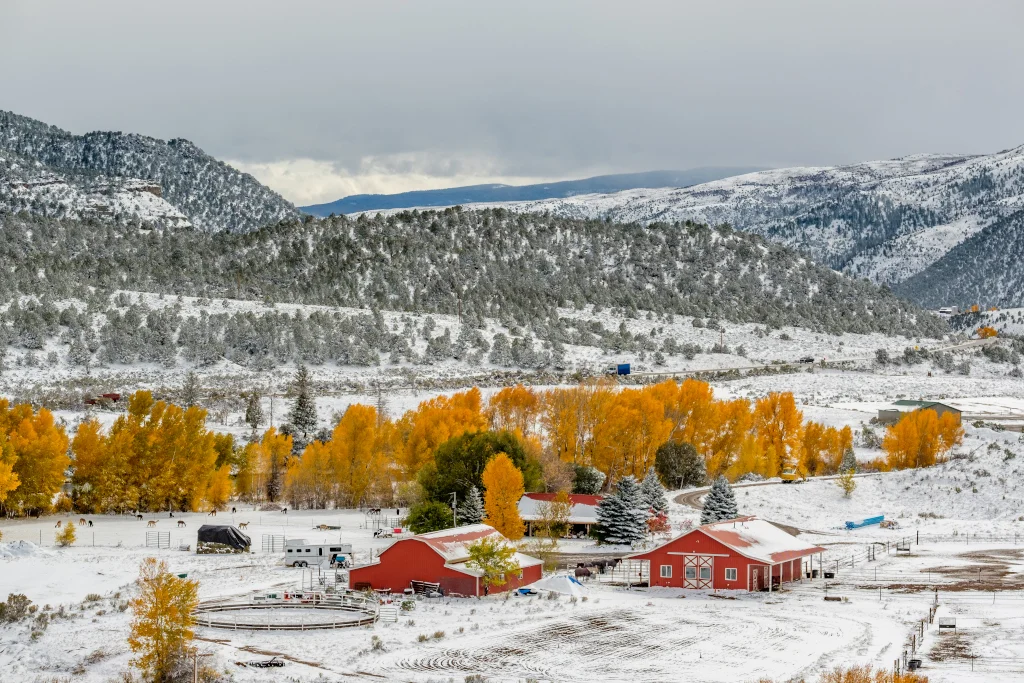
You could be sunning one day and snowing the next. Colorado is known for its brutal winters, and residents who live off the grid here prepare for them during the summer. The state typically receives 60-100 inches of snow each year, and winter can last for around 6 months. If you move to Colorado, you’d better like the snow!
Check out my previous article, Off-Grid Living in Pennsylvania, if you’re interested in an East Coast state.
What is Colorado’s Climate?
Colorado features a variety of climates due to its vastness, including continental, subarctic, semi-arid, and humid subtropical. The typical summertime temperature is around 90 degrees Fahrenheit, and the average winter temperature is around 30 degrees Fahrenheit.
It’s important to remember that average temperatures fluctuate a lot over the summer and winter; it’s not uncommon to have a couple of hot days followed by chilly days or even days with temperatures below freezing.
During the summer, Colorado receives severe afternoon thunderstorms, making it impossible to go outside and work. The state has also been facing a drought in the past few years, making it tough for those relying on rainwater.
If you’re interested in reading about one of Colorado’s neighbors, check out my guide to Arizona.
What Types of Crops Are Grown in Colorado?
Colorado is similar to Kansas when it comes to crop production. Wheat, potatoes, beans, sugar beets, hay, and corn are the principal crops farmed here. The western and central sections of the state, in general, are the finest for cultivating crops.
Although you will be able to cultivate crops in practically all places, some of them may require the use of a greenhouse and composting system. The elevation in the western half of the state also makes it difficult for farming and agriculture.
What’s Freshwater Availability Like in Colorado?
The average annual rainfall is around 20 inches, and the average annual snowfall is around 80 inches. The issue is that most rain and snowfall in mountainous areas occur at a higher altitude. One of the most important needs for living off-grid is the capacity to capture rainwater. Unfortunately, capturing rainwater in Colorado was once illegal, and there are still some limits and regulations in place today.
For most places in Colorado, homeowners are only allowed to collect up to 110 gallons of water. This may sound like a lot, but if you’re living off-grid, it’s really not. Here are the official documents about Colorado’s rainwater regulations.
Water will be your primary concern if you plan to live off-grid in Colorado. In most places, groundwater isn’t available, and even if it is, there’s a good chance it’s contaminated. This is mainly due to the state’s high amount of animal farming. Off-grid residents in Colorado can use above-ground water sources or buy water and store it in big storage tanks.
What Kind of Wildlife Does Colorado Have?
Colorado is home to a variety of creatures, including the Colorado bison, bighorn sheep, mountain lion, black bear, elk, wild horses, and beavers.
Lake trout, tiger trout, mountain whitefish, white bass, spotted bass, walleye, bluegill, and Kokanee salmon can all be found in the area’s rivers and lakes. You’ll need a license for fishing and hunting, which can be obtained online relatively easily. You can find the permits on the state’s website.
How to Get Off-Grid Power in Colorado
Solar power: Colorado had a statewide renewable energy program a few years ago. Regrettably, it is no longer available, though it may reappear in the future. The good news is that you may still qualify for the federal tax credit, which is worth 30%; however, keep in mind that this credit is decreasing by roughly 5% every year.
Wind energy: While there are no statewide incentives for installing a wind turbine, you can still apply for a federal tax credit. Towards the mountains, there are high wind speeds enough to power your homestead with the wind. I highly recommend wind energy when looking into off-grid power systems in Colorado.
Are there Off-Grid Living Laws in Colorado?
Living off-grid in Colorado is legal; there are no laws forbidding you from doing so. However, as previously mentioned, rainwater collection is limited by the government. If you keep up with off-grid living news, you’ve probably heard that some Colorado counties make it nearly impossible to live off-grid.
For example, Costilla County has forbidden camping on private property. Some people believe this is because the authorities do not want people living off-grid in this county. On the other hand, some argue that these individuals were engaging in unlawful activity. The fundamental issue is that many people settled in a region to live off-grid, and some of them didn’t own the land they were on.
What is Road Access Like in Colorado?
The roads in Colorado are not of the highest quality; locations with a semi-arid environment will have scorching temperatures during the day and freezing temperatures at night, which is bad for the roads and causes them to crack or have a lot of potholes.
Road access can be difficult in the winter, especially at higher elevations. We recommend owning a 4-wheel drive vehicle if you’re planning on traveling through Colorado during the winter season. Chains on your tires are also a must.
What is the Price of Land in Colorado?
When it comes to housing and land, Colorado is relatively expensive. Prices average roughly 66 percent higher than the national average. Normally, such high prices would be found on the east and west coasts rather than in the center of the country.
The good news is that land and housing can still be found for less than the national average. Most of this land is in semi-arid locations, which are not ideal for off-grid life.
Colorado Property Tax
Colorado used to have one of the lowest property taxes in the country. However, things have changed, and it has increased to 7.15 percent(at the time of publishing). It will be lowered by about 1% for the 2023 tax season.
What is the Cost of Living in Colorado?
Colorado’s cost of living is much higher than the national average. Housing costs 66 percent more, transportation costs 7% more, and consumables cost 1% more. On the other side, you’ll pay about 5% less for healthcare and 2% less for utilities.
What is the Job Market Like in Colorado?
Colorado’s unemployment rate is 3.4 percent, which is lower than the national average of 3.7 percent (at the time of publishing). The unemployment rate has been steadily declining in recent years, and it was 3.7 percent in 2019. The minimum payment is $12.56, which is greater than the minimum wage in the bordering states. It will be increased by a dollar in the upcoming tax season as well.
What is Colorado’s Crime Rate?
Colorado’s crime rate is slightly lower than the national average. There are 3.97 crimes per 1000 people compared to the national average of 4 crimes per 1000 people. Creede, Marble, Hooper, Cotopaxi, Florissant, and Divide are the safest places to be. The communities near Pueblo, Canon City, Glenwood Springs, Fraser, Alamosa, and Denver have the highest crime rates.
When living off-grid in Colorado, you’ll most likely be away from the general crime, however. Most of this occurs near the larger, urban areas.
Is Living Off-Grid in Colorado Affected by Natural Disasters?
Colorado has a lot of natural disasters because of its diverse climates. Blizzards, hailstorms, floods, heatwaves, and droughts are some of the most common.
Flash floods, forest fires, and earthquakes are the most destructive natural disasters that occur. If moving to this state, I recommend purchasing an emergency preparation kit.
Can You Live Off-Grid In Colorado?
Overall, I cannot suggest living off-grid in Colorado. There are too many negative considerations, such as the high cost of living off-grid, legislation, and prohibitions. I’m not saying you couldn’t live off the grid in this state, but you will definitely have an easier time doing so in one of its surrounding states!
To play devil’s advocate, I can see why Colorado would be an incredible state to live off-grid in. The beauty of nature alone makes me want to move!
We’ve got an in-depth guide on living off-grid in every state. Check them out here.
FAQ
- Is living off-grid legal in Colorado?
Yes, but rainwater collection and some county restrictions make it harder than in other states. - Can you collect rainwater in Colorado?
Yes, but only up to 110 gallons, which is not sufficient for full off-grid needs. - What crops grow best in Colorado?
Wheat, potatoes, beans, sugar beets, hay, and corn are the most successful crops. - How much snow does Colorado get?
Typically between 60–100 inches per year, with winters lasting up to six months. - What is the biggest challenge for off-grid living in Colorado?
Water scarcity and strict rainwater collection laws.
Get our newest articles every week
One short email a week with our newest self-reliance and off-grid articles. Free, and you can unsubscribe at any time.
We use Mailchimp to send this email. See our privacy policy.