Quick answer: Yes, living off the grid in Washington State is possible and even popular, but it comes with challenges such as high costs, diverse climates, and frequent natural disasters. The eastern side offers more sunshine for crops and solar power, while the western side provides abundant rainfall and milder winters. However, land is expensive, regulations must be followed, and resilience is key.
Washington State Overview
Washington is one of the most urbanized states in the Pacific Northwest, with cities like Seattle (734k), Spokane (229k), Tacoma (219k), and Vancouver (192k). Yet, most of the land is rural, where off-grid living thrives. Expect long drives to larger towns for specialty goods and higher overall living costs compared to the national average.
Climate
- Western Washington: Mild, wet climate with 37+ inches of rainfall per year. Summers rarely exceed 79°F, winters rarely dip below 25°F. Cloudy skies limit solar options.
- Eastern Washington: Dry and sunny with up to 300 days of sunshine, 7–9 inches of rainfall, hot summers (80s–90s°F), and cold winters (0–20°F). Wildfire smoke is common in summer.
Homesteading & Crops
Washington is an agricultural powerhouse, producing apples, hops, peas, lentils, wheat, and strawberries. The east is best for sun-loving crops, while the west supports limited farming due to rain and cloud cover.
Water Access
Rainwater harvesting is legal and unrestricted. Western Washington has abundant rainfall, while the east relies on wells or stored water. Groundwater remains relatively pure due to limited factory farming.
Wildlife
Expect encounters with cougars, black bears, deer, coyotes, and mountain goats. Rivers and coasts provide salmon, sturgeons, and seaperch. Hunting is permitted with proper licensing and adherence to state regulations.
Off-Grid Power Options
- Solar: Best in Eastern Washington with 300 sunny days/year. Federal tax credit (30%) and state incentives apply.
- Wind: Viable in western regions, but turbines near coasts may corrode from salt spray. Federal credits are also available.
Laws & Regulations
Off-grid living is legal. You must follow building codes, install septic systems, and file simple paperwork for homeschooling. Rural counties tend to be more lenient on permitting.
Road Access
Rural areas often have poor roads, requiring 4×4 vehicles and snow chains in mountain areas. Be prepared for limited winter access in remote homesteads.
Cost of Living
Washington is 15% above the national average. Housing costs are 64% higher, transportation 13% higher, and grocery costs are 2% higher. Healthcare is 17% cheaper, and utilities are 26% cheaper. No state income tax helps offset some of the expense.
Property Taxes
The average property tax is around 1%. Some counties like Whatcom (0.84%) and King (0.88%) are slightly lower.
Jobs & Economy
Unemployment is 4.6%, higher than the national average (3.5%). Key industries: agriculture, forestry, tourism, and tech. Minimum wage is $15.74, but insufficient for urban living—more manageable for rural off-grid setups.
Crime Rate
Washington averages 3.36 crimes per 1,000 residents, below the U.S. average of 4/1,000. Rural towns like Palouse, Colfax, and Black Diamond are safest, while Spokane and Tacoma have higher crime rates.
Natural Disasters
Risks include wildfires, floods, earthquakes, landslides, storms, tsunamis, and volcanic eruptions. Washington is home to Mount Rainier, an active volcano considered overdue for eruption.
In More Details
Washington State is a common place for off-gridders to admire. Think about it, the pristine wilderness, tall mountains, and surplus of rain. However, at the same time, there are plenty of downsides to living off the grid in Washington State.
Today, we’re covering both the good and the bad – the reasons you should and should not live off the grid in Washington State. Now, let’s get into it.
What To Know About Washington State
First, we’re talking about the general stuff. The rather boring, but stuff you need to know.
A lot of the Pacific Northwest lacks major cities. However, Washington is an exception, with eight cities with populations of over 100,000 people. Some of the most popular include: Seattle with 734k people, Spokane with 229k, Tacoma with 219k, Vancouver with 192k, and Bellevue with 149k.
Although it may seem that Washington has quite the urban population, the truth is that, except for a few places where larger cities are located, most of the state is rural.
We’ll be clear. If you’re living off the grid, you’re going to be far away from any of the cities mentioned above. However, you’ll still end up going there to pick up specialty goods you can’t find in the smaller towns. That being said, you’ll want to know how expensive things are there.
And on the West Coast, things get expensive. Check out my latest piece, Off-Grid Living in Delaware, if you’re more interested in states on the East Coast.
What’s the Climate in Washington State?
Washington State has two sorts of climates. It just depends on where you’re located in the state.
Generally, things are pretty mild, staying between 79°F and not dropping below 25°F. With that being said, the western side of the state (split by the Cascade Mountain Range) has a bit more relaxed weather than the eastern side.
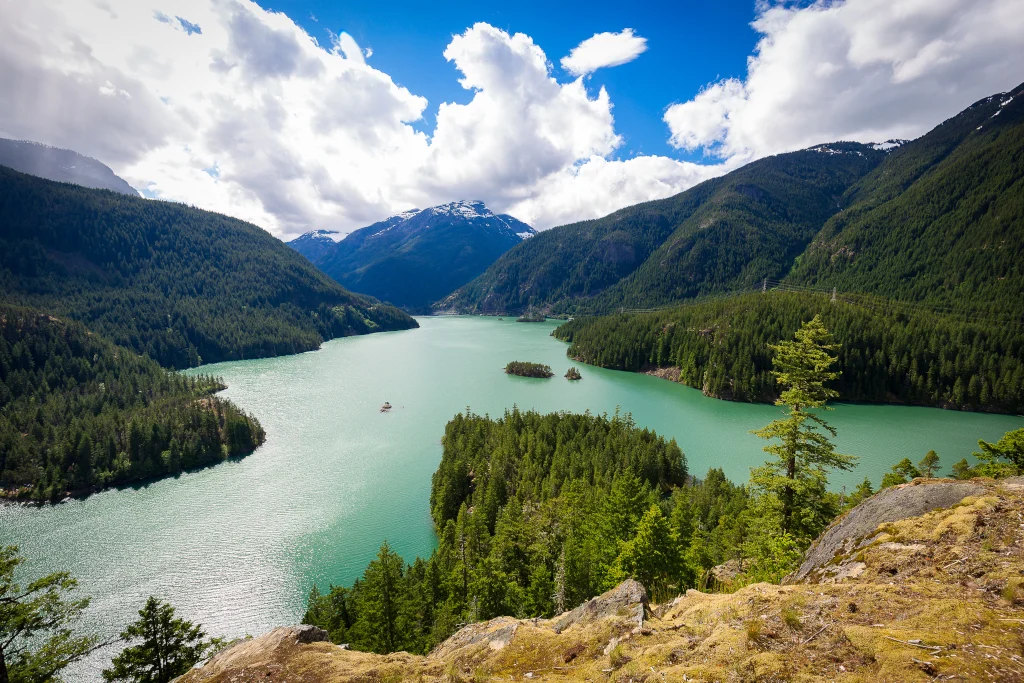
On the west side, summer days rarely rise above 79°F and winter days rarely fall below 45°F while the sun’s out. Snow is relatively rare, but winter temperatures do easily drop down into the 20°s and 30°s when the sun goes down. The western side of the state also receives a large amount of rainfall (up to 37 inches each year) and not much sun.
On the other side of things, the East Coast has a much drier climate. It only receives 7 to 9 inches of rain a year with 300 days of sunshine on average. Things are a little more extreme compared to the western half of the state, with hotter summers and colder winters.
It can easily hit the upper 80°s and 90°s in the summer and temperatures as low as 20°s to just above 0°F in the winter. During the summer, however, the western side (and sometimes the mid and eastern side of the state) receives harsh smoke from wildfires along the west coast.
Check out my previous article Off Grid Living in Nevada if you want to learn more about an arid (and hot) state.
What Types of Crops Can You Grow in Washington State?
If you’re planning on homesteading, you need to know what you can grow. Lucky for you, the climate for growing crops in Washington State is fantastic. That being said, you’ll have more luck growing crops in the sunnier eastern side of the state than on the western side.
Washington is one of the top producers of a variety of fruits and vegetables. There are several notable farms that cultivate wheat, peas, spring wheat, lentils, pulse crops, and strawberries. Washington produces over 80% of the country’s hops, 70% of wrinkled seed peas, and 72% of the country’s apples. So, if you love applied cider (or beer), Washington State might be the place for you!
Check out my previous article on Living Off the Grid in West Virginia if you’re interested in another state with a strong growing season.
Water Availability in Washington State
Water is life. Seriously, without water, you’ll quickly find yourself in trouble.
Lucky for you, the state of Washington has no water shortages (yet), and you can lawfully capture rainwater without any restrictions. Furthermore, the ground and above-groundwater sources are incredibly pure because there are few animal farms in this state to pollute the groundwater.
That being said, you’ll have a lot more access to water on the western side of the state than on the eastern side. The western side of the state receives 40 inches of rainfall a year on average, while the eastern side receives only 8 inches a year.
If you want to learn about a state that receives a lot of rain, check out Hawaii.
What Kind of Wildlife is in Washington State?
It’s full of mountains, rivers, and lakes. You know what that means – there are a lot of wild animals.
Mountain goats, cougars, American black bears, coyotes, red foxes, lynx, mule deer, and white-tailed deer can all be found in Washington. The fish, on the other hand, are quite limited. However, you can still find sturgeons, pikes, salmon, mud minnows, and smelt. Calico surfperch, white seaperch, walleye surfperch, striped seaperch, and more varieties of seaperch can be found along the coast as well.
If you’re interested in hunting, make sure you’re up-to-date on the regulations, which can be found here.
How to Generate Off-Grid Power in Washington State
There are two main ways to generate power in Washington State (rather than using traditional electricity, of course):
- Solar Power: Solar power will be fantastic on the east side of the state (with 300 sunny days a year on average). On the east side of the state, you might not be in much luck thanks to the rain, clouds, and constant fog. In Washington State, you’ll have access to the State Renewable Energy System Incentive Program, generally known as RESIP. You can also apply for the federal tax credit, which is a rough 30% credit.
- Wind Power: Installing a wind turbine in the state’s western portion will be the best option. On the East Coast, you will struggle with spray from the saltwater, which may damage the turbine. Just like the solar incentive, you can also claim a federal tax credit if you use wind power.
Are There Off-Grid Living Laws in Washington State?
There are no laws forbidding you from living off the grid; in fact, Washington State is a rather popular option for living off the grid. As long as you follow the building regulations, communicate with local authorities, and install a septic tank, you should be in the clear.
Additionally, homeschooling is also very popular in Washington. That means the homeschooling rules are not particularly rigorous, and you will simply need to submit some basic documentation, which is perfect for homesteaders.
What’s Road Access Like in Washington State?
In many rural areas, road access is lacking.
If you’re living far out from town, dirt roads, gravel roads, or just unkept paved roads are common. This means a car that’s capable of 4×4 is important. You’ll especially be needing these features if you live near the mountains, which receive a lot of snow.
For those who do live in the mountains, we recommend investing in a pair of chains for your tires. You’ll have better traction, acceleration speed, and braking abilities. Of course, you can always live somewhere that’s milder for your car. We recommend Southern California.
What’s the Cost of Living in Washington State?
We’ve got to be honest. Washington State is fantastic, but the cost just isn’t.
The cost of buying a house and land in Washington is quite high. In general, Washington State is 15% more expensive than the national average. You will be lucky, however, because Washington State has no income tax – meaning you’ll save some money there.
To get more specific, housing costs are up to 64% more expensive, transportation is up to 13% more expensive, and groceries are 2% more expensive. On the other side, you can expect to pay roughly 17% less for healthcare and 26% less for utilities.
You can expect to pay a lot for housing and land in Washington State, no matter where you are. For the cheapest deals, we recommend looking in the middle and eastern sides of the state – away from any large towns or cities.
If you’re looking for cheaper land, we recommend checking out Oklahoma.
What’s the Property Tax in Washington State?
Washington’s property tax rate is 1% percent, which is just around the average. Of course, this is more expensive than most of the southern states, but it’s not as bad as some of its West Coast relatives.
That being said, you can find lower property taxes in the state, with Whatcom County sitting at 0.84% and King County at 0.88%. Both of these counties sit in the middle of the state.
What’s the Job Rate in Washington State?
Washington’s unemployment rate is high at 4.6%, whereas the national average is 3.5%. The minimum wage is $15.74, which is high, although not livable in most of the state. For off-grid living, however, the minimum wage may be enough.
Agriculture, forestry, transportation, communication technology, and tourism are the major businesses in which most people work.
What’s the Crime Rate in Washington State?
The crime rate is now 3.36 crimes per 1,000 people, lower than the national average of 4 crimes per 1,000 people. The areas of St. John, Lyle, Colton, Palouse, Black Diamond, and Colfax have the lowest crime rates, which are all rural.
On the other side of things, the cities with the highest crime rates are Shelton, Spokane, Ritzville, Chehalis, and Tacoma – all highly populated. For the most part, most rural places see less violent crime; however an increase in stolen goods and property damage.
Is Living Off the Grid in Washington State Affected by Natural Disasters?
Washington State is certainly not free from natural disasters. In fact, it’s more of the opposite.
You’ll notice wildfires, floods, serious storms, landslides, earthquakes, tsunamis, tornadoes, and even volcanoes if you live in Washington State. Remember, there is an active volcano that is overdue for an eruption.
Is Living Off the Grid in Washington State Possible?
Overall, we recommend living in Washington State on the eastern side of the state. While it’s very expensive, it has the right conditions for growing. That being said, you’ll have to deal with harsh winters and volatile weather in the state.
For those who are prepared, Washington State may be the perfect spot for you to settle down. Just make sure you bring your checkbook.
Frequently Asked Questions About Living Off the Grid in Washington State
Is it legal to live off-grid in Washington State?
Yes, off-grid living is legal as long as you follow building codes, install septic systems, and meet county requirements.
Which side of Washington is better for off-grid living?
The eastern side offers more sun for farming and solar power, while the western side has abundant water and milder winters.
Is land affordable in Washington State?
Washington is one of the more expensive states for land and housing, especially around Puget Sound. The cheapest rural land is found in central and eastern Washington.
Can you harvest rainwater in Washington?
Yes. Under the Washington Department of Ecology‘s rainwater policy, you don’t need a water right permit to collect rooftop rainwater, as long as you use it on the property where it was collected. If you want rainwater to be the only drinking water source for a new home, your county must approve it, and many counties don’t.
Do you need a permit to drill a well in Washington?
Most household wells don’t need a water right permit. State law allows domestic use of up to 5,000 gallons per day from a permit-exempt well, but some watersheds set much lower limits for new wells, according to the Department of Ecology. Your well still has to be drilled by a licensed driller, and you must file a notice of intent before construction.
Is solar power practical off the grid in Washington?
Yes, especially in central and eastern Washington, which get far more sunshine than the cloudy west side. On the west side, plan for a larger battery bank or a backup generator for the dark winter months. Note that the federal 30% residential solar tax credit no longer applies to systems installed after December 31, 2025, according to the IRS.
What are the main risks of living off-grid in Washington?
High costs, wildfires, flooding, earthquakes, and even volcanic activity.
Get our newest articles every week
One short email a week with our newest self-reliance and off-grid articles. Free, and you can unsubscribe at any time.
We use Mailchimp to send this email. See our privacy policy.