This post contains affiliate links. If you buy through them, we may earn a commission at no extra cost to you. Learn more.
The best mulch for flower beds is organic mulch that retains moisture, enriches the soil, and suppresses weeds—top choices include leaves, grass clippings, compost, and wood chips. These options not only promote healthy blooming but also reduce the need for weeding and watering.
Mulching flower beds enhances plant health, boosts blooming, and simplifies garden maintenance. Choosing the right mulch depends on your garden goals—whether aesthetic appeal, weed control, moisture retention, or soil nutrition. Organic mulches like grass, leaves, and seaweed break down quickly to nourish flowers, while decorative options like wood chips or pebbles prioritize appearance and longevity.
Top 9 Mulches for Flower Beds
- Grass Clippings: Readily available, fast-decomposing, and nutrient-rich. Apply in a 2–3 inch layer and water lightly. Avoid contact with stems.
- Wood Chips: Attractive and long-lasting. Retains moisture and suppresses weeds. Combine with compost for quicker nutrient access.
- Compost: Nutrient-packed and excellent for feeding flowers. Use well-aged, plant-based compost to avoid pests.
- Leaves: Free, fast-decomposing, and high in nutrients. Shredded leaves work best. Water them to prevent blowing away.
- Decorative Rocks: Great for low-maintenance aesthetics and weed suppression. Keep in mind they retain heat—extra watering needed in summer.
- Seaweed: Nutrient-dense and quick to break down. Doesn’t hold moisture well, so water regularly.
- Hay: Moisture-retaining and rich in nutrients. Not ideal for showy flower beds, but perfect for larger or shrub-filled areas.
- Straw: Similar to hay but may contain seeds that sprout. Best used away from prized flower arrangements.
In More Details
Many novice gardeners ask themselves, ”what is the best mulch for flower beds” – we’re here to answer that. Flower beds benefit immensely from various mulches, as flowering plants, like vegetables, require a lot of nutrients to bloom. Most novice gardeners begin with a small flower bed and progress to growing their own food after a few years. You will find it much easier to weed your flower beds if you start mulching them and witness some spectacular blossoms.
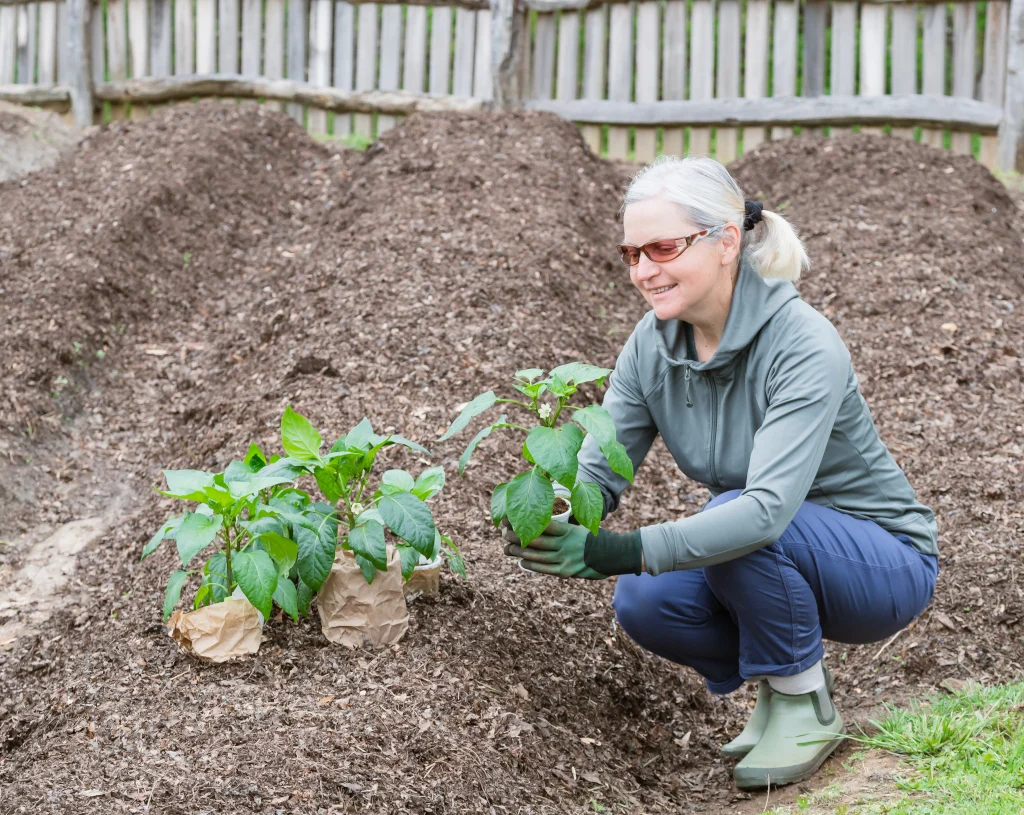
Organic mulches that retain water and protect the soil from direct sunshine are the finest mulches for flower gardens. Mulches for flower gardens include leaves, grass, wood chips, and seaweed. If you prefer a more hands-off approach to mulching your flower beds, use wood chips and decorative pebbles, which look great in a well-arranged flower bed.
Flower beds require a lot of attention to maintain their appearance, but this does not necessarily imply that the more nutrients in the soil, the better the flowers will perform. Far too many individuals just over-fertilize their flower beds, resulting in stunted flower development. If you’ve been fertilizing your flower beds with fertilizer, it’s time to switch to a decent mulch. You’ll notice the benefits of mulching your flower beds in a few weeks.
Before mulching your flower beds, you must first decide what kind of mulch to use and what your mulching goals are. You can use an inorganic mulch to discourage weeds and improve the appearance of your garden. You can also use organic mulches that suppress weeds, retain water, and feed your plants.
Interested in more mulch talk? Check out my guide on the Best Mulch for Potted Plants!
What Mulch Should You Use for a Flower Bed?
Grass Clippings
If you have a flower bed, you probably have a lot of grass clippings on hand. Grass clippings are a great mulch for flower gardens since they degrade quickly, which is important if you’re growing annual flowers. Water the grass mulch after layering it around your flowers in a 2-3 inch layer, ensuring it doesn’t contact the plants’ stems.
Wood Chips
Wood chips are commonly used in flower beds for aesthetic reasons; nothing is more attractive than a flower bed with wood chips and a clear edge. Wood chips are great for storing water, reducing weeds, and feeding your flowering plants once they’ve broken down. Water the mulch after layering the wood chips around your blooms in a 2-3 inch layer, ensuring they don’t contact the plant’s stem.
Wood chips contain many vital minerals that are good for most flowers. However, the decomposition process is so slow that your flowers cannot access these nutrients for several years. My advice for your flower beds is to apply fertilizer or another form of organic mulch in addition to the wood chip mulch.
This is a small bag of wood chips that are great for flower beds. I love that they come in small quantities for smaller beds.
Compost
Compost can be a great mulch for your flower beds because it usually contains many vital nutrients. However, it all depends on the type of compost you use. For your flower beds, you can use compost from kitchen trash, but I don’t encourage it because it can attract pests like mice, rats, slugs, and snails. On the other hand, if you’re using compost derived from plant matter, your flower beds should be alright.
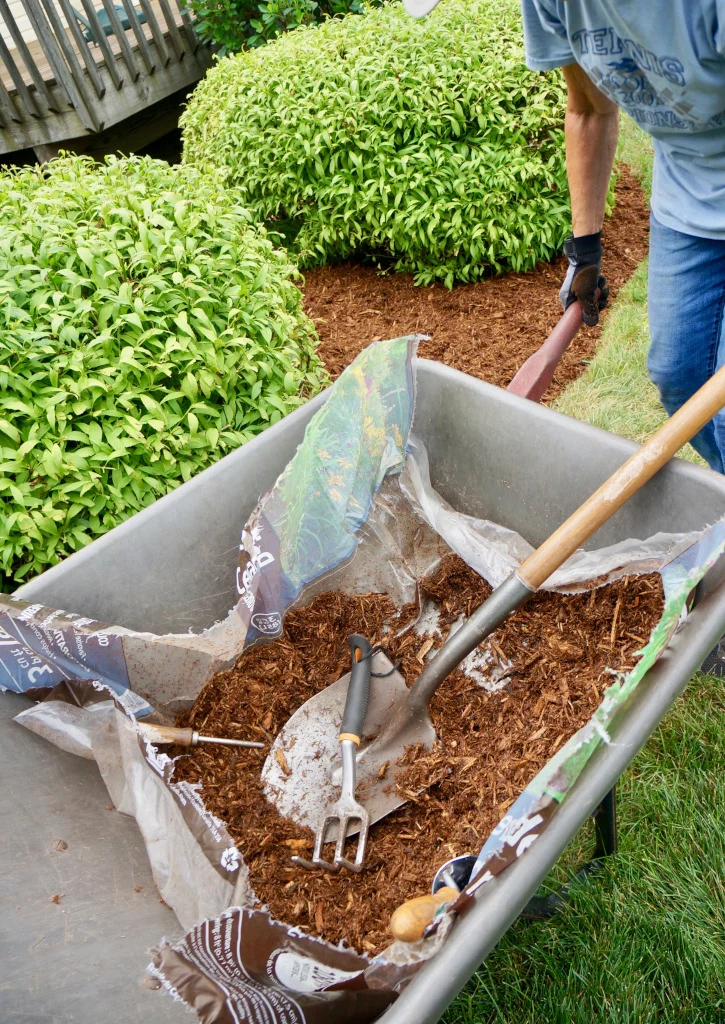
Place a 2-3 inch layer of compost around your flowers, making sure it is not in direct contact with the plants’ stems, and then water the compost mulch.
Leaves
Leaves are a fantastic mulch for flower beds because they contain many nutrients and decay quickly. This allows your flowers to benefit from the nutrients in a short amount of time. You can mulch with either whole or shredded leaves. However, the shredded ones decay much faster. It will be much easier to work with the leaves if you water them before placing them around your blooms, and the wind will not blow them away.
Place the leaves around the flowers, ensuring they don’t touch the plants’ stems, and then give them a good watering to let the decomposition process start.
Decorative Rocks
Because decorative pebbles have no organic characteristics, they are solely employed in flower beds for cosmetic purposes. Pebbles are a great weed suppressor, and this mulch is a great way to mulch your flower beds without having to get your hands dirty. Although stones look great in flower beds, keep in mind that they can absorb and propagate a lot of heat.
This means you’ll need to water your plants on hot summer days. Otherwise, the pebbles will convert the flower garden into an oven. Place the decorative pebbles around your flowers, making sure they don’t come into direct contact with the plants’ stems.
Seaweed
Seaweed is high in nutrients; applying it as mulch for your flower beds will benefit them. Seaweed decomposes quickly. Thus, the nutrients held inside the seaweed will be available to your flowers in just a few weeks. Seaweed mulch, on the other hand, does not hold water well, so make sure to water it from time to time. Place a 2-3 inch layer of seaweed mulch around your flowers, ensure the mulch does not contact the plants’ stems, and then moisten the mulch.
Hay
Although many still use hay as a flower garden mulch, it is not the best option. Hay mulch is beneficial for flower gardens because it decomposes quickly, controls weeds, maintains moisture, and the hay is high in nutrients. Suppose the appearance of your flower bed is more important to you. In that case, especially if you have young flower plants, you should definitely use other forms of organic mulches.
Lay a 2-3 inch layer of hay mulch around your flowers, but don’t let the hay touch the plants’ stems. If you have shrubs, hay makes an excellent mulch since larger plants will simply cover the hay.
Straw
Straw can be a useful mulch for your flower beds, but if the visual appearance of your flower bed is important to you, you can forgo this one. The primary issue with putting a straw in your flower beds is that straw contains a lot of wheat seeds, which may eventually sprout in your flower beds. Place a 2-3 inch layer of straw around the flowers, ensuring the straw does not contact the plants’ stems.
Final Thoughts
The key to a healthy flower bed is selecting mulch that complements your gardening goals. For fast nourishment, choose quick-decomposing options like grass, leaves, or seaweed. For a neater appearance with weed control, go with wood chips or decorative rocks.
Always apply mulch in 2–3 inch layers and avoid direct contact with plant stems to prevent rot or pest issues. With proper mulching, your flower beds will bloom more vibrantly and require less upkeep.
Want to read more of our gardening resources? Check out our Gardening Page for more articles dedicated to homesteaders.
FAQ
- What is the most nutrient-rich mulch for flowers?
Compost and seaweed are among the most nutrient-rich mulches, offering immediate benefits to blooming plants. - Which mulch lasts the longest in flower beds?
Wood chips and decorative rocks last the longest and are ideal if you want a low-maintenance, long-term solution. - Can I use fresh grass clippings as mulch?
Yes, but apply them thinly and allow them to dry slightly before mulching to avoid matting and mold issues. - Is mulch necessary for flower beds?
While not strictly necessary, mulch significantly improves soil quality, reduces weeds, and retains moisture, leading to healthier flowers. - Can I mix different mulches?
Yes! Combining wood chips with compost or layering leaves under straw can provide both nutrients and longer-lasting weed control.